Improving Typing Speed Games for Beginners









168 Typing Practice & Free Typing Lessons. Try Now.
1. Keyboard Games: Nitro Type
Nitro Type Race is probably the most famous among all free typing games. It is a typing car race game.
In this game, you own the yellow car. The car will be running ahead until the game ends. Once you select your favorable difficulty level, the game will begin. You will see several cars around your car. On each car, you will see a word.
If you target a car and type the word on it, the enemy car will be destroyed. What if you type a letter incorrectly? Your enemy car will fire at you and your car will be damaged. If enemy cars keep damaging your car, you will eventually lose the game.
If you are winning in the beginner level every time, you should try the upper level that is more difficult and requires faster typing speed.
If you want to practice paragraph typing games racing, you should try our TypeRacer game because this game only lets you type different words. There is no paragraph typing option in this game.
Play this fast typing game now
2. Keyboard Games: Ninja Cat
Although you will find Ninja Cat in free typing games, it is not very popular nowadays. Once upon a time, it was very popular in typing practice games.
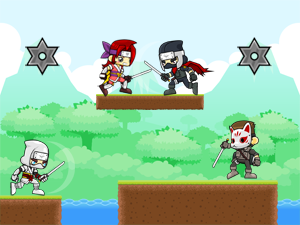
In this typing practice game, the Ninja Cat fights on behalf of you. When you keep typing correctly, your Ninja Cat will keep attacking the other Ninja man. The man will eventually die. What if you make a mistake? The enemy will immediately attack you and you must take damage in such a case.
Keep typing properly until the result statistics are shown.
Play this fast typing game now
3. Keyboard Games: TypeRacer / Type Racer
TypeRacer is also very popular among free typing games. It is not as popular as the Nitro Type Race game but it is also a very popular typing car race game.
Are you looking for typing test paragraphs? In this game, you will get an opportunity to type paragraphs. There are several cars in this game. You own one of the cars. You will see a random paragraph. Your job is to type each word without making any mistakes. Besides being accurate, you must type fast. Slow typing and mistakes will contribute to losing the game.
You will notice that both accuracy and speed are important in most typing practice games.
Play this fast typing game now
4. Keyboard Games: ZType
Few free typing games could reach and hold the popularity of ZType. As far as we have seen, this game has been popular for 10+ years.
This is a space shooter game. Your task is to shoot down the enemy fighter jets. Each enemy fighter jet has a word around it. You finish typing this word and the enemy fighter jet gets destroyed. Then you target another fighter jet and type its word and then it gets destroyed too. This goes on until the game ends.
Although you are allowed to make mistakes in this game, every mistake will cost your typing words per minute score.
Play this fast typing game now
5. Keyboard Games: Zombie Typing Game Typocalypse
In the list of free typing games, the Zombie typing game was very popular once upon a time. You can see other zombie typing games in other websites too because it was very popular once upon a time. It is still somewhat popular nowadays.
The typing game online idea is pretty simple. Zombies will be approaching you. As soon as they are very near to you, they will immediately kill you. Do you want to kill or get killed? Every zombie brings a word with it. You shoot down the zombie by typing the word. Your job is to keep shooting the approaching zombies.
Other similar typing test games work in a very similar way.
Play this fast typing game now
6. Keyboard Games: Dance Mat Typing
It is also one of the most popular free typing games. It was originally developed by BBC and then others made their own versions of this game because of its high popularity.
Our fast typing game here does not totally match with that of the BBC game. In our version, you will find that a child will be dancing. You keep typing correctly, the child will keep dancing and balloons will fly one after another. You start typing incorrectly, the child stops dancing. So, you see this typing game online has a pretty simple idea.
Please note that this game has a long list of exercises. These exercises cover pretty much everything you need for your typing practice.
Play this fast typing game now
7. Keyboard Games: Keyboard Climber 2
10 (ten) years ago, there were many free typing games and Keyboard Climber 2 was a popular choice. Nowadays this game is not as popular as before.
In this typing game online, you have your player jump above and climb all the top levels. In each level, there is an enemy waiting for you. You type some random letters and you kill the enemy when you finish typing the random letters attached to the enemy. You do not need to take any action to jump upward. As soon as you kill an enemy by typing correctly, your player automatically jumps upward to fight with another enemy.
The only purpose of this game is to help the beginners learn alphabet typing.
Play this fast typing game now
8. Keyboard Games: Just Type This
This game does not take place in free typing games. It is an ordinary typing game.
It is a Mario typing game. It is also a platformer game where Mario keeps running and jumping and thus tries to avoid obstacles. There are many moving obstacles in this typing game online. If Mario hits a moving object, it will die immediately. Although Mario will probably get another life, you should be careful so that you do not make any typing mistake. Even if you make a mistake, keep your mistakes to the minimum number.
This game is basically for beginners who need to practice alphabet typing.
Play this fast typing game now
9. Keyboard Games: Flying Race
This typing game also does not expect any place in popularity in free typing games.
There are several birds in this game. You help one bird to fly fast and win this flying race. When you type fast and correctly, the speed of your bird increases. The speed increases so much that your bird flies past other birds to take the first position. What if you type slowly? What if you type incorrectly? In both these cases, the speed of your bird slows down and it keeps lagging behind. If your typing speed and accuracy does not improve immediately, the chance of your win quickly goes down.
To win in this fast typing game every single time, keep typing fast without making any mistakes.
Play this fast typing game now
10. Keyboard Games: Save The Child
Among all our free typing games, this game is the simplest.
A monster is chasing a child. A child is running for its life. You can help the child to save its life.
At the bottom of the game canvas, you will see a letter from the English alphabet. As soon as you type it, the game begins. Both the child and monster start running. As soon as you type the letters correctly, the child survives. If you keep making typing mistakes, the monster will approach the child fast and kill the child. Your typing speed and accuracy can cost the child's life.
The primary purpose of this typing game online is to help you master typing all letter fast from the English alphabet.
Play this fast typing game now
Bookmark This Page (Ctrl + D)


Typing Test — Top 10 (ten) World Ranking
Get an online typing test certificate now
Please note: We may delete certificates older than 6 (six) months.
Best Score | World Ranking | Countrywise Ranking
Get a Certificate | Register | Log In
WPM = Words per minute
| Sl. | Name | Level | Net WPM | Accuracy | Country |
|---|---|---|---|---|---|
| 1. | Broderick Bagert | Professional | 111 | 99.10% | United States |
| 2. | Farhan | Professional | 93 | 93.96% | Indonesia |
| 3. | Teoh You Le | Professional | 83 | 95.41% | Malaysia |
| 4. | Braeden Edward O'Daniel | Fast | 68 | 97.13% | United States |
| 5. | Laura Elizabeth Ewing | Fast | 67 | 94.38% | United States |
| 6. | Laura Elizabeth Ewing | Fluent | 60 | 93.79% | United States |
| 7. | Laura Elizabeth Ewing | Fluent | 59 | 90.77% | United States |
| 8. | Laura Elizabeth Ewing | Fluent | 56 | 93.29% | United States |
| 9. | Laura Elizabeth Ewing | Fluent | 53 | 82.87% | United States |
| 10. | Osama Abbas hussain | Fluent | 47 | 100.00% | Pakistan |
How we grade your typing speed:
| Level | Net WPM |
|---|---|
| Slow | 0 - 25 |
| Average | 26 - 45 |
| Fluent | 46 - 60 |
| Fast | 61 - 80 |
| Professional | 80+ |
Performance Graph — Based on top 10 (ten) world ranking
Typing Test — Last 25 Practice Results
Get an online typing test certificate now
Please note: We may delete certificates older than 6 (six) months.
Best Score | World Ranking | Countrywise Ranking
Get a Certificate | Register | Log In
The following list shows how some users of this website have performed within last 24 hours.
WPM = Words per minute
How we grade your typing speed:
| Level | Net WPM |
|---|---|
| Slow | 0 - 25 |
| Average | 26 - 45 |
| Fluent | 46 - 60 |
| Fast | 61 - 80 |
| Professional | 80+ |
Performance Graph — Based on last 25 results
Improving Typing Speed Games for Beginners
Imagine you are typing a message to a friend. You know exactly what you want to say. Your brain is ready. Your words are ready. But your fingers are not ready at all.
You look down at the keyboard. You hunt for letters. You press the wrong key. You hit backspace again and again. Suddenly, a simple message feels like a tiny battle with plastic buttons.
Now imagine the opposite.
Your eyes stay on the screen. Your fingers move without panic. Words appear quickly. You feel calm, smooth, and confident. Typing starts to feel less like work and more like playing a piano.
That transformation is possible. And improving typing speed games can help you get there faster than boring practice alone.
But here is the part most beginners miss. The best typists are not just “fast finger people.” They are smooth. They are relaxed. They make fewer mistakes. Their fingers know the keyboard like a familiar neighborhood.
That is the real secret behind improving typing speed games. They train your brain and fingers at the same time, while making practice feel fun enough to repeat.
And yes, repetition is the magic. But do not worry. We are not talking about painful, boring repetition. We are talking about races, word challenges, falling letters, accuracy goals, and small wins that make you want to come back tomorrow.
Why Improving Typing Speed Matters
Improving typing speed helps with many everyday tasks.
If you are a student, faster typing helps you finish homework, essays, notes, and online assignments quicker.
If you are an adult, faster typing helps with emails, job forms, reports, messages, and daily computer work.
If you are a gamer, faster typing helps you communicate quickly during team play.
If you are learning computer skills, typing is one of the first skills that makes everything else easier.
Typing is not just a school skill. It is a life skill. In today’s world, typing is part of how people learn, work, chat, search, create, and solve problems.
Here is something interesting. Many average computer users type around 38 to 40 words per minute. A beginner may type much slower, especially when they look down at the keyboard. A trained typist may reach 60, 70, 90, or even more words per minute with practice.
That difference matters.
A task that takes a slow typist 20 minutes may take a faster typist 8 or 10 minutes. That may not sound huge at first. But think about schoolwork, emails, forms, and messages over weeks and months. Faster typing saves real time.
This is why improving typing speed games are so useful. They turn a basic skill into something you can practice daily without feeling bored.
What Improving Typing Speed Games Really Do
Improving typing speed games are not just games with letters. They are training tools.
They help you build muscle memory. They help you react faster. They help you make fewer mistakes. They also help you stay focused longer because your brain enjoys a challenge.
A normal typing drill may say, “Type these letters again and again.”
A game says, “Can you beat your last score?”
That small change matters.
When practice feels like a challenge, beginners usually stay with it longer. And when you stay with typing practice longer, your fingers improve.
Improving typing speed games also give quick feedback. You can see your words per minute, accuracy, missed letters, and score. This makes progress visible.
And progress is motivating.
Think about a video game. You keep playing because you want the next level, the next score, or the next win. Typing games use that same idea, but instead of just entertainment, you build a useful skill.
How Improving Typing Speed Games Train Your Brain
Your typing speed is not only about moving your fingers quickly.
It is mostly about muscle memory.
Muscle memory means your fingers learn where the keys are without you thinking about every move. It is like riding a bike. At first, you wobble. You think about everything. Your hands feel stiff. But after practice, your body remembers what to do.
Typing works the same way.
At first, you may think, “Where is the letter R? Where is the letter M? Which finger should press P?”
That slows you down.
But after enough practice, your fingers begin to move automatically. You see a word, and your hands respond. You stop searching. You stop guessing. You start typing.
Improving typing speed games help because they repeat common letters, words, and patterns. The repetition teaches your fingers where to go.
Games also add pressure in a safe way. A word may fall from the screen. A race may move forward. A timer may count down. This teaches your brain to focus while your fingers move.
That is powerful training for beginners.
How To Know Your Current Typing Skill Level
Before you start playing improving typing speed games, take a simple typing test.
Do not worry about getting a perfect score. This first test is just your starting point.
Type for one minute. Then look at two numbers.
The first number is WPM, which means words per minute.
The second number is accuracy, which shows how many words or letters you typed correctly.
If your speed is below 25 WPM, you are a beginner. That is perfectly fine. Everyone starts somewhere.
If your speed is between 25 and 45 WPM, you have basic typing control. You can improve a lot with better accuracy and regular practice.
If your speed is above 45 WPM, you already have a decent base. You can use improving typing speed games to build smoother rhythm, fewer mistakes, and higher speed.
No matter where you start, the goal is not to feel bad about your score.
The goal is to know your baseline.
Once you know your starting point, every improvement feels real. Even going from 18 WPM to 23 WPM is a win. That means your fingers are learning.
The Most Common Mistake Beginners Make
Most beginners try to type faster by forcing speed.
They see the timer. They panic. They slap the keys. They make mistakes. Then they backspace. Then they get frustrated.
That feels fast, but it is actually slow.
Here is the simple truth.
Accuracy comes before speed.
When you type with poor accuracy, your real speed drops. Mistakes take time to fix. They break your rhythm. They also teach your fingers bad habits.
Improving typing speed games work best when you play with control. Do not rush at the start. Try to hit the correct keys first. Speed will grow naturally after that.
Think of it like basketball.
A beginner should not only throw the ball as fast as possible. First, they learn the correct shooting form. Then they practice. Then speed and confidence grow.
Typing is the same.
Correct movement first. Smooth rhythm second. Speed third.
How To Position Your Hands The Right Way
Before playing improving typing speed games, learn the home row position.
The home row is the middle row of the keyboard. It is where your fingers rest before and after pressing other keys.
Place your left hand fingers on A, S, D, and F.
Place your right hand fingers on J, K, L, and ;.
Your thumbs should rest near the space bar.
Most keyboards have small bumps on the F and J keys. These bumps help your index fingers find the home row without looking.
This is important because home row gives your fingers a “home base.” After pressing a key, your finger can return to its starting spot.
Without home row, beginners often float around the keyboard. Their hands move too much. Their fingers get lost. Their speed stays low.
With home row, your fingers learn a clear map.
Improving typing speed games become much more effective when you use proper hand placement. You are not just playing. You are training the right movements.
What Makes Improving Typing Speed Games So Effective
Improving typing speed games are effective because they combine practice with fun.
They keep your attention active.
They give instant feedback.
They encourage repetition without boredom.
They challenge your reaction time.
They help you track progress.
They build confidence through small wins.
They make mistakes feel less scary.
This is why games can work better than plain drills for many beginners. A boring drill may make you quit after five minutes. A game may keep you practicing for 15 minutes without noticing the time.
That extra practice matters.
One short session will not make you a fast typist overnight. But short sessions repeated daily can create big results.
Improving typing speed games are not magic. They are practice made easier to repeat.
And repeated practice is where skill comes from.
Examples Of Improving Typing Speed Games Beginners Can Try
There are many types of improving typing speed games. Each one trains a slightly different skill.
Typing race games are popular. You type words or sentences to move a car, animal, or character forward. These games help you type under pressure. They also make practice exciting because you want to beat your last score or race another player.
Falling word games are also useful. Words drop from the top of the screen, and you must type them before they reach the bottom. This improves reaction speed, focus, and word recognition.
Letter shooting games train quick key recognition. A letter, word, or target appears, and you remove it by typing correctly. This is great for beginners who still need help remembering key locations.
Rhythm typing games use timing, beats, or steady word flow. These games help you develop smooth typing rhythm. Rhythm matters because smooth typing is usually faster than tense typing.
Sentence typing games help with real-life typing. You practice full sentences, punctuation, capital letters, and spacing. This helps with school, work, and everyday writing.
Number typing games help with numbers, dates, phone numbers, and data entry. These are useful for students, office workers, and anyone who types forms.
The best choice depends on your goal. If you want speed, try races. If you want accuracy, try letter and word games. If you want real-world skill, practice full sentences.
A Simple Step-By-Step Plan For Beginners
If you are new, do not overthink it. Use this simple plan.
Step 1: Take a one-minute typing test.
Write down your WPM and accuracy. This is your starting score.
Step 2: Learn the home row keys.
Practice A, S, D, F and J, K, L, ; until your fingers feel comfortable.
Step 3: Play easy improving typing speed games for 10 minutes.
Start with simple letter games or easy word games. Do not jump into advanced races too soon.
Step 4: Focus on accuracy.
Try to keep your accuracy above 90 percent. If your accuracy drops too much, slow down.
Step 5: Practice short sessions daily.
Ten to fifteen minutes a day is enough for beginners. Daily practice beats one long session once a week.
Step 6: Retake your typing test once a week.
Compare your new score with your old score. Look for small improvements.
Step 7: Increase difficulty slowly.
When easy games feel comfortable, move to harder words, longer sentences, and timed challenges.
This plan works because it is simple. You do not need expensive tools. You do not need hours of practice. You just need steady effort.
Why Accuracy First Always Wins
Let’s say two beginners are playing improving typing speed games.
The first beginner types very fast but makes many mistakes.
The second beginner types slower but makes very few mistakes.
Who is learning better?
Usually, the second beginner.
Because clean typing builds clean muscle memory. Your fingers learn the correct path. Your brain gets less confused. Your rhythm stays smooth.
Mistakes are normal, of course. You should not feel bad about them. But you should not ignore them either.
If you keep pressing the wrong key again and again, your fingers may remember the wrong movement. That makes improvement slower.
So here is the rule.
Slow is smooth. Smooth becomes fast.
This is one of the most important lessons in improving typing speed games. Do not chase speed too early. Build accuracy, then speed will follow.
How Long Does It Take To Improve Typing Speed?
Many beginners want to know how long it takes to type faster.
The honest answer is: it depends.
But you can often see small progress in one week if you practice daily.
If you play improving typing speed games for 10 to 15 minutes every day, you may notice better control within a few days. You may make fewer mistakes. You may look at the keyboard less. You may feel less tense.
After one month, many beginners can improve by 10 to 20 WPM, especially if they practice correctly.
But remember, progress is not always a straight line.
Some days your score may go up. Some days it may drop. That is normal.
Your brain and fingers are learning. Just keep practicing.
The goal is not to become perfect in one day. The goal is to become a little better each week.
The Big Secret Behind Fast Typing
Here is the secret promised earlier.
Typing fast is not really about trying to be fast.
Typing fast is about being smooth.
When your fingers move smoothly, speed happens naturally. When your hands are tense, speed gets stuck. When your brain has to search for every key, speed drops. When you make too many mistakes, speed breaks.
Improving typing speed games help because they train smooth movement through repetition.
You see letters and words again and again. Your fingers learn the path. Your eyes stay on the screen. Your hands relax. Your rhythm improves.
Then one day, typing feels easier.
That is when speed starts to grow.
It may feel like a small miracle, but it is not magic. It is practice. It is muscle memory. It is consistency.
Understanding Finger Movement Patterns
One of the most important parts of typing is knowing which finger should press each key.
Many beginners use only two fingers. This is called hunt-and-peck typing. It works for short tasks, but it slows you down for longer typing.
Touch typing uses more fingers. Each finger has a job.
Your left index finger handles keys like F, R, T, G, V, and B.
Your right index finger handles keys like J, Y, U, H, N, and M.
Your middle fingers, ring fingers, and pinky fingers also have their own keys.
At first, this may feel strange. Your pinky may feel weak. Your ring finger may feel lazy. That is normal. Some fingers are not used to working hard.
Improving typing speed games help strengthen these finger movements. Letter games are especially helpful because they force you to practice keys you may avoid.
For example, if you often miss Q, Z, P, or ;, choose games that include those keys. Do not only practice easy letters.
A strong typist trains the whole keyboard.
Why Consistency Is More Important Than Long Practice
Many beginners think they need to practice for hours.
You do not.
In fact, very long practice can make your hands tired and your mind bored. When you are tired, mistakes increase. Bad habits can grow.
Short daily practice is better.
Ten minutes every day is better than one hour once a week.
Think about brushing your teeth. You do not brush for three hours once a month. You brush a little every day.
Improving typing speed games are perfect for this because they fit into small breaks. You can play for 10 minutes before homework, after dinner, before work, or during a study break.
Small daily practice builds muscle memory.
Muscle memory builds confidence.
Confidence builds speed.
Choosing Games That Match Your Skill Level
Not every typing game is right for every beginner.
If a game feels too easy, you may get bored.
If a game feels too hard, you may feel frustrated.
The best improving typing speed games should feel challenging but possible.
If you are just starting, choose games with single letters, short words, and basic sentences. Focus on accuracy and hand placement.
If you can already type simple words, try falling word games or short timed games.
If you are more comfortable, try race games, longer paragraphs, and sentence challenges.
Do not compare yourself to expert typists. Compare yourself to your past score.
That is the fair comparison.
If you were 20 WPM last week and now you are 24 WPM, that is progress.
If your accuracy was 82 percent and now it is 90 percent, that is progress.
Improving typing speed games should help you grow step by step, not make you feel defeated.
How To Build Confidence While Practicing
Typing confidence matters more than many beginners realize.
If you feel nervous, your shoulders tighten. Your fingers become stiff. Your breathing gets shallow. Mistakes happen more often.
Before you start improving typing speed games, take a breath. Place your fingers on the home row. Keep your shoulders loose. Remind yourself that mistakes are part of learning.
Then begin.
Celebrate small wins.
Did you type one sentence without looking at the keyboard? Great.
Did your accuracy improve by 2 percent? Great.
Did you practice three days in a row? Great.
Confidence grows from proof. Every small win proves that you can improve.
The more confident you feel, the more relaxed your typing becomes. The more relaxed your typing becomes, the faster you can type.
Turning Practice Into A Daily Habit
The easiest way to improve is to make typing practice part of your day.
Do not wait until you “feel motivated.” Motivation comes and goes. Habits keep working.
Attach your practice to something you already do.
For example, play improving typing speed games after breakfast.
Or practice before starting homework.
Or play for 10 minutes after checking email.
Or practice before watching a show.
This method works because your brain connects typing practice with an existing routine.
You can also set a small goal. For example, “I will play one typing game every day for seven days.”
That sounds easy. That is the point.
Easy habits are easier to keep.
Once the habit is built, you can increase practice time if you want.
Developing Typing Rhythm And Flow
Typing speed is not just about pressing keys quickly. It is also about rhythm.
A choppy typist types in bursts.
Fast, stop, mistake, backspace, fast, stop again.
A smooth typist types with flow.
Steady, calm, clean, and controlled.
Improving typing speed games help you build rhythm because many games show words at a steady pace. They teach you to keep moving without panic.
Try this simple trick.
When you type, imagine a gentle beat. Do not smash the keyboard. Tap lightly. Keep your fingers moving at a comfortable pace.
Your goal is not to attack the keys. Your goal is to glide over them.
This sounds small, but it makes a big difference.
Smooth typing reduces mistakes. Fewer mistakes protect your rhythm. Better rhythm increases speed.
The Role Of Breathing In Typing Speed
This may sound funny, but breathing affects typing.
When beginners try too hard, they sometimes hold their breath. Their shoulders lift. Their hands tighten. Then their fingers slow down.
Before playing improving typing speed games, relax your body.
Breathe in.
Breathe out.
Let your hands feel light.
You do not need to squeeze the keyboard. You do not need to press keys with force. A light touch is enough.
If you notice tension while typing, pause for five seconds. Shake your hands gently. Reset your fingers on the home row. Continue.
Typing is easier when your body is calm.
Using Warm-Up Exercises Before Typing Games
Athletes warm up before running. Typists can warm up too.
A short warm-up helps your fingers wake up before you play improving typing speed games.
Try this simple warm-up.
Type this pattern slowly for one minute:
asdf jkl; asdf jkl; asdf jkl;
Then type this:
qwer uiop qwer uiop
zxcv m,./ zxcv m,./
Do not rush. The goal is to remind your fingers where the keys are.
You can also type the alphabet slowly from A to Z. Then try typing it again without looking at the keyboard.
Warm-ups help reduce mistakes at the start of practice. They also make your hands feel more ready.
Learning To Trust Your Fingers Over Your Eyes
Many beginners look down at the keyboard after every few letters.
This is normal, but it slows you down.
Your eyes should stay mostly on the screen. Your fingers should learn the keyboard by touch.
Improving typing speed games help because they reward quick reactions. If you keep looking down, you may fall behind. Over time, this teaches you to trust your fingers.
At first, you may make more mistakes when you stop looking. That is okay.
Your fingers are learning.
Try practicing with easy words first. Keep your eyes on the screen. Let your fingers search by feeling. If you make a mistake, correct it and continue.
Do not panic.
Every time your fingers find a key without your eyes, your muscle memory gets stronger.
Setting Personal Milestones To Stay Motivated
Big goals can feel scary.
“I want to type 90 WPM” may sound exciting, but it can also feel far away for a beginner.
Small goals work better.
Set weekly milestones.
For example:
Reach 25 WPM.
Reach 90 percent accuracy.
Practice five days this week.
Finish three improving typing speed games without looking at the keyboard.
Improve your score by 2 WPM.
Type one full paragraph with fewer than five mistakes.
Small milestones make progress feel possible.
And when progress feels possible, you keep going.
You can also write your scores in a notebook. Add the date, WPM, and accuracy. After a few weeks, look back.
You may be surprised by how much you improved.
Balancing Speed And Accuracy While Playing
Typing games can make you want to go fast.
That is part of the fun.
But remember, speed without accuracy is a trap.
If your game score shows 45 WPM but your accuracy is 70 percent, your real typing skill needs work. Too many mistakes will slow you down in real life.
A better goal is steady improvement.
Try to keep accuracy above 90 percent. If you can do that, slowly push your speed higher.
Here is a simple rule.
If accuracy is below 85 percent, slow down.
If accuracy is 90 to 95 percent, keep going.
If accuracy is above 95 percent, try a slightly harder game or a faster pace.
Improving typing speed games are most useful when you use them wisely. Do not just chase the biggest number. Build clean typing.
How Posture Affects Typing Performance
Your body position affects your typing more than you may think.
If you slouch, your arms may feel awkward. If your wrists press hard on the desk, your hands may get tired. If your keyboard is too far away, your fingers may stretch too much.
Sit comfortably.
Keep your back straight but not stiff.
Keep your feet on the floor.
Keep your elbows close to your body.
Keep your wrists relaxed and slightly raised.
Place the keyboard where your hands can reach it easily.
When you play improving typing speed games, comfort matters. A comfortable body helps your fingers move freely.
Typing should not hurt. If you feel pain, stop and rest. You can continue later with better posture.
Reducing Distractions For Better Focus
Typing requires focus.
If your phone keeps buzzing, your score may drop. If loud music distracts you, mistakes may increase. If you are tired, your fingers may feel slow.
Choose a quiet time when possible.
Even 10 focused minutes of improving typing speed games can be better than 30 distracted minutes.
Before practice, close extra tabs. Put your phone aside. Sit comfortably. Start with one clear goal.
For example, your goal may be:
“I will focus on accuracy today.”
“I will not look at the keyboard for this game.”
“I will practice home row words for 10 minutes.”
A clear goal makes practice stronger.
Practicing With Real Sentences For Real-Life Skills
Typing random words is helpful. Typing letters is helpful. Typing games are helpful.
But you should also practice real sentences.
Because real typing includes capital letters, punctuation, commas, periods, questions, and natural word flow.
If you only play games with simple words, you may still struggle when writing emails or school papers.
So mix your practice.
Play improving typing speed games for speed and focus.
Then type real sentences for practical skill.
For example, type a short paragraph about your day. Or copy a simple story. Or practice typing common email sentences like:
Thank you for your message.
I will send the file today.
Please let me know if you have any questions.
This kind of practice helps you use your typing speed in real life.
How Improving Typing Speed Games Help Students
Students can benefit a lot from improving typing speed games.
Schoolwork often requires typing. Students type essays, reports, research notes, answers, online homework, and messages to teachers.
A student who types slowly may spend more time fighting the keyboard than thinking about ideas.
That can be frustrating.
When typing becomes easier, students can focus more on the content. Their ideas can flow faster. Homework may feel less stressful.
For younger students, typing games can make practice feel playful instead of forced. A game with falling words or friendly races may feel much better than a plain worksheet.
For older students, timed typing games can prepare them for online tests, writing assignments, and computer-based tasks.
Improving typing speed games are not just for fun. They can support learning.
How Improving Typing Speed Games Help Adults
Adults need typing too.
Emails. Job applications. Work reports. Customer messages. Online forms. Notes. Chats. Spreadsheets. Business tasks.
Typing is everywhere.
Many adults learned computers later or never learned proper typing. That can feel embarrassing, but it should not. Typing is a skill, and skills can improve at any age.
Improving typing speed games are helpful for adults because they make practice less boring. You do not have to sit with a textbook and feel like you are back in school.
You can play a short game. You can track your score. You can improve privately at your own pace.
Even moving from 25 WPM to 40 WPM can make daily computer work feel easier.
And for many jobs, comfortable typing is a real advantage.
How Improving Typing Speed Games Help Gamers
Gamers often care about reaction time. Typing can be part of that.
In team games, fast typing helps with quick chat. In some games, typing commands quickly can matter. Even outside the game, gamers often use messages, forums, chats, and streaming tools.
Improving typing speed games can help gamers improve fast finger movement and keyboard familiarity.
But there is another benefit.
Typing games train focus under pressure. A timer, race, or falling word challenge can feel intense. You learn to stay calm while reacting quickly.
That skill can help in many digital activities, not just typing.
The Best Daily Routine For Beginners
Here is a simple daily routine you can follow.
Start with a one-minute warm-up.
Type home row patterns slowly. Focus on finger placement.
Then play one easy typing game for accuracy.
Do not rush. Try to keep mistakes low.
Next, play one improving typing speed games challenge that feels a little harder.
This could be a falling word game, race game, or timed word game.
Then type one short real sentence paragraph.
This helps connect game practice to real-life typing.
Finally, write down your WPM and accuracy if the game shows them.
This routine can take 10 to 15 minutes.
That is enough for steady progress.
What To Do If Your Typing Speed Gets Stuck
Sometimes your typing speed may stop improving for a while.
This is called a plateau.
Do not panic. Plateaus are normal.
If your score is stuck, try changing your practice.
If you always play race games, add accuracy games.
If you always type easy words, try longer sentences.
If you always practice speed, slow down for a few days and rebuild accuracy.
If you always use the same game, try a different type of improving typing speed games.
You can also check your posture, hand position, and finger movement. Sometimes the problem is not effort. Sometimes the problem is a small bad habit.
For example, maybe you keep using the wrong finger for certain keys. Maybe you look down too often. Maybe you press backspace too much.
Find the weak spot and practice it slowly.
That is how you break through a plateau.
Common Beginner Problems And Simple Fixes
Problem: You keep looking at the keyboard.
Solution: Practice easy words while keeping your eyes on the screen. You can also cover your hands lightly with a small cloth for short practice sessions.
Problem: You make too many mistakes.
Solution: Slow down. Choose easier improving typing speed games and focus on accuracy.
Problem: Your wrists feel tired.
Solution: Check your posture. Keep your wrists relaxed. Take breaks. Do not press the keys too hard.
Problem: Your fingers feel confused.
Solution: Practice home row and finger zones. Start with letter games before racing games.
Problem: You get bored quickly.
Solution: Switch game types. Try races one day, falling words the next day, and sentence games after that.
Problem: Your speed drops suddenly.
Solution: Do not worry. Bad days happen. Sleep, focus, mood, and stress can affect typing. Continue practicing.
Problem: You cannot stop using backspace.
Solution: In practice mode, try to continue typing instead of correcting every tiny mistake. Some games measure accuracy without needing constant backspace.
What Beginners Should Avoid
Do not practice for too long when your hands are tired.
Do not chase speed while ignoring accuracy.
Do not use only two fingers if your goal is real speed.
Do not look down at the keyboard every second.
Do not compare yourself to expert typists online.
Do not quit after one bad score.
Do not think typing faster means smashing the keys harder.
Good typing is light, calm, and controlled.
Improving typing speed games should help you build better habits, not stressful habits.
If a game makes you too tense, choose an easier one. Practice should challenge you, but it should not make you miserable.
How To Use Typing Scores The Smart Way
Typing scores are useful, but they are not everything.
WPM tells you how fast you typed.
Accuracy tells you how clean your typing was.
Both matter.
A good beginner goal may be 25 to 35 WPM with 90 percent accuracy.
A strong everyday goal may be 40 to 60 WPM with good accuracy.
A fast goal may be 70 WPM or more.
But do not rush.
When using improving typing speed games, watch your trends over time. One score does not tell the whole story.
Maybe today you got 32 WPM. Tomorrow you got 30 WPM. That does not mean you failed.
Look at your weekly average. Are you getting better overall? Are mistakes going down? Are you looking at the keyboard less?
Those are real signs of progress.
Making Typing Practice More Fun
Fun matters because fun keeps you coming back.
Try turning typing practice into a mini challenge.
Beat your score from yesterday.
Try to reach 95 percent accuracy.
Play one game against a friend.
Choose a theme you enjoy.
Practice with funny sentences.
Set a timer for 10 minutes and see how focused you can stay.
You can also reward yourself after practice. For example, after finishing improving typing speed games for 10 minutes, watch a short video, take a break, or play another favorite game.
The reward does not need to be big.
It just helps your brain connect typing practice with a positive feeling.
Why Short Practice Sessions Work So Well
Beginners often believe more practice always means better practice.
Not always.
Your brain learns well in short, focused sessions. Your fingers also need rest. If you practice too long, your accuracy may drop.
That is why improving typing speed games work well in short sessions.
You can play one or two games, learn something, and stop before you feel tired.
Then you come back tomorrow.
This keeps practice fresh.
A good beginner routine is 10 minutes a day. If you enjoy it, you can do 15 or 20 minutes. But you do not need to force long sessions.
The goal is consistency.
How Parents Can Help Kids Practice Typing
Parents can use improving typing speed games to help kids learn without pressure.
The key is to make practice positive.
Do not focus only on high scores. Praise effort, accuracy, and consistency.
For example, say:
“You kept your eyes on the screen longer today.”
“Your accuracy improved.”
“You practiced without giving up.”
Kids often enjoy typing games because they feel like play. But they still need guidance. Help them sit correctly. Remind them to use home row. Keep sessions short.
A 10-minute practice can be enough for a child.
The goal is to build a healthy habit, not turn typing into a punishment.
How Teachers Can Use Improving Typing Speed Games
Teachers can also use improving typing speed games in classrooms or computer labs.
A short typing game at the start of class can warm up students. It can also help them become more comfortable with keyboards.
Teachers can set simple goals, such as improving accuracy or practicing certain letters.
Typing games can also support students who struggle with computer-based assignments. When typing gets easier, students can focus more on learning.
The best approach is to track personal progress, not compare students harshly.
One student may start at 15 WPM. Another may start at 40 WPM. Both can improve.
Personal growth is the goal.
How To Practice Without Getting Frustrated
Frustration is common when learning to type.
You may think, “Why do I keep missing the same key?”
Or, “Why was I faster yesterday?”
Or, “Why do my fingers feel slow today?”
Take a breath.
Typing improvement is not a straight road. It has bumps.
Improving typing speed games can help because they make practice more playful, but you still need patience.
When you feel frustrated, slow down. Choose an easier game. Focus on one thing.
Maybe today’s goal is not speed. Maybe today’s goal is using the correct finger for the letter B. Or keeping your eyes on the screen. Or staying relaxed.
Small focus creates big improvement over time.
A Beginner-Friendly Weekly Typing Plan
Here is a simple weekly plan.
Day 1: Take a typing test. Write down your WPM and accuracy. Play easy letter games.
Day 2: Practice home row. Play word games slowly with high accuracy.
Day 3: Try falling word games. Focus on staying calm.
Day 4: Practice real sentences. Then play one short race game.
Day 5: Focus on weak keys. Practice letters you often miss.
Day 6: Play your favorite improving typing speed games for fun and confidence.
Day 7: Retake a typing test. Compare your score with Day 1.
This plan gives variety. It trains accuracy, speed, rhythm, and real-life typing.
You can repeat this plan every week.
As you improve, increase the difficulty.
Why Typing Games Beat Boring Practice For Many Beginners
Boring practice can work, but many beginners do not stick with it.
That is the problem.
Improving typing speed games solve this by making practice feel alive. There is a score. There is movement. There is a challenge. There may be levels, timers, races, or goals.
Your brain likes feedback.
When you see your score improve, you feel rewarded. That makes you want to practice again.
This is why games are so powerful for beginners. They do not just train typing. They train consistency.
And consistency is the real engine behind improvement.
The Long-Term Benefits Of Typing Skill
Typing may seem like a small skill, but it can affect many parts of your life.
Faster typing helps you finish work quicker.
It helps students write assignments with less stress.
It helps adults handle emails and forms more easily.
It helps gamers communicate faster.
It helps beginners feel more confident using computers.
It can even make writing feel more enjoyable because your hands can keep up with your thoughts.
Improving typing speed games help build this skill in a simple and enjoyable way.
You may start with slow typing and many mistakes. But with regular practice, your fingers begin to learn. Your confidence grows. Your speed rises.
That is a skill you can use for years.
Final Tips Before You Start Practicing
Start slow.
Use the home row.
Keep your eyes on the screen.
Focus on accuracy before speed.
Practice for 10 to 15 minutes daily.
Use improving typing speed games that match your level.
Track your WPM and accuracy once a week.
Stay relaxed.
Do not quit after a bad day.
Remember, typing speed is not built by one huge practice session. It is built by small sessions repeated often.
Your fingers need time. Your brain needs patterns. Your confidence needs proof.
Improving typing speed games give you all three.
Improving typing speed games are more than simple entertainment. They are helpful learning tools for beginners who want to type faster, make fewer mistakes, and feel more confident on a keyboard.
They train muscle memory. They build rhythm. They improve focus. They make repetition fun. They give instant feedback. They help you practice long enough to see real progress.
You do not need to be naturally fast. You do not need to practice for hours. You do not need to feel embarrassed about your starting score.
You only need a simple plan.
Take a typing test. Learn home row. Play improving typing speed games daily. Focus on accuracy. Stay smooth. Track your progress. Keep going.
Accuracy comes first.
Smoothness comes second.
Speed comes after that.
With patience and daily practice, your fingers will stop feeling lost. The keyboard will start to feel familiar. Words will appear faster. Typing will feel easier.
And one day, you may smile when you realize something wonderful.
You are not hunting for keys anymore.
You are typing.
More Resources
- Improve Your KPH Typing Test Accuracy Fast
- Medical Typing Tests for Beginners Online Free
- Master Fast 10 Fingers Typing for Beginners
- Free Online English Typewriting Speed Test for Beginners
- Improve Your Typing Speed in Just Minutes a Day
- Master Typing Speed With Comtyping Club Lessons
- Best Free Typing Lessons for Free to Boost Speed
- Text Typing Speed Test Online Free for Beginners
- Check Typing Speed Test Online Instantly
- Best Typing Test Free Online Test for Beginners