Best Keyboard Race Games to Boost Your Typing Speed
9 more typing games: (1) Nitro Type (2) Ninja Cat (3) ZType (4) Zombie Typing Game Typocalypse (5) Dance Mat Typing (6) Keyboard Climber 2 (7) Just Type This (8) Flying Race (9) Save The Child
★★★ 168 Typing Lessons ★★★ $375 Course FREE (Limited Time Offer)
To play this game, just type the words inside the blue area under the game canvas.
Complete a Typing Test in 60 Seconds!
144 Free Typing Practice Lessons. Try Now.
Video Tutorial: How to play this game
How to play:

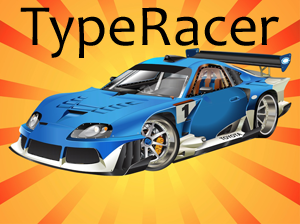
The blue car above is your car. In this TypeRacer / Type Racer game, you should type the words you see just below the game canvas. You should type the words in the input box given below the game canvas. Once you finish typing a line, you will see the next line. Keep typing and keep your competitors behind you.
To select / change difficulty level, please type / press 1, 2, or 3 on your keyboard when you see the game over screen.
You must type fast to win in this TypeRacer / Type Racer game. But every mistake will heavily reduce the chance of winning this game. So, try your best to avoid making mistakes.
In the easy level, you must score minimum 26 words per minute to win. In the medium level, minimum 46 words per minute is required. But in the hard level, you need minimum 81 words per minute to win.
Virtual Gold Medals: If you score more than 80 words per minute, you will get three virtual gold medals which is the highest rank in this game. If you are winning three virtual gold medals every time, you surely have professional typing skill which is a desired skill for many people. But you get two virtual gold medals if score between 61 and 80. Finally, you get only one gold medal for scoring between 46 and 60.
1. Typing Practice » Beginner Level » Home Row (1 - 17)
Practice Lesson 1: Index fingers: J and F
Practice Lesson 2: Middle fingers: K and D
Practice Lesson 3: Review: JFKD
Practice Lesson 4: Ring fingers: S and L
Practice Lesson 5: Pinkie fingers: A and ;
Practice Lesson 6: Index fingers: G and H
Practice Lesson 7: Back and forth
Practice Lesson 8: Left hand keys 1
Practice Lesson 9: Left hand keys 2
Practice Lesson 10: Right hand keys 1
Practice Lesson 11: Right hand keys 2
2. Typing Practice » Beginner Level » Top Row (18 - 32)
Practice Lesson 18: Index fingers: R and U
Practice Lesson 19: Middle fingers: E and I
Practice Lesson 20: Ring fingers: W and O
Practice Lesson 21: Pinkie fingers: Q and P
Practice Lesson 22: Index fingers: T and Y
Practice Lesson 23: Back and forth
Practice Lesson 24: All left hand 1
Practice Lesson 25: All left hand 2
Practice Lesson 26: All right hand 1
Practice Lesson 27: All right hand 2
3. Typing Practice » Beginner Level » Bottom Row (33 - 46)
Practice Lesson 33: Index fingers: V and M
Practice Lesson 34: Middle fingers: C and ,
Practice Lesson 35: Ring fingers: X and .
Practice Lesson 36: Pinkie fingers: Z and /
Practice Lesson 37: Index fingers: B and N
Practice Lesson 38: Back and forth
Practice Lesson 39: All left hand 1
Practice Lesson 40: All left hand 2
Practice Lesson 41: All right hand 1
Practice Lesson 42: All right hand 2
4. Typing Practice » Beginner Level » Miscellaneous (47 - 68)
Practice Lesson 47: Review 1: Left hand words
Practice Lesson 48: Review 2: Right hand words
Practice Lesson 49: Review 3: Alternating hand words
Practice Lesson 50: Capitals 1
Practice Lesson 51: Capitals 2
Practice Lesson 52: Capitals 3
Practice Lesson 53: Capitals 4
Practice Lesson 62: Numeric Keypad 1
Practice Lesson 63: Numeric Keypad 2
Practice Lesson 64: Numeric Keypad 3
Practice Lesson 65: Numeric Keypad 4
Practice Lesson 66: Easy Words
Practice Lesson 67: Easy Words
Practice Lesson 68: Easy Words
5. Typing Practice » Intermediate Level (69 - 110)
Practice Lesson 69: Common Letter Combinations - CK
Practice Lesson 70: Common Letter Combinations - CH
Practice Lesson 71: Common Letter Combinations - PH
Practice Lesson 72: Common Letter Combinations - GH
Practice Lesson 73: Common Letter Combinations - TH
Practice Lesson 74: Common Letter Combinations - DG
Practice Lesson 75: Common Letter Combinations - ION
Practice Lesson 76: Common Letter Combinations - OUS
Practice Lesson 77: Common Letter Combinations - ATE
Practice Lesson 78: Common Letter Combinations - QU
Practice Lesson 79: Common Letter Combinations - IAL
Practice Lesson 80: Common Letter Combinations - ENT
Practice Lesson 81: Common Letter Combinations - ER
Practice Lesson 82: Common Letter Combinations - GRA
Practice Lesson 83: Common Letter Combinations - OR
Practice Lesson 84: Common Letter Combinations - ABLE
Practice Lesson 85: Common Letter Combinations - IC
Practice Lesson 86: Common Letter Combinations - EI
Practice Lesson 87: Common Letter Combinations - ACY
Practice Lesson 88: Common Letter Combinations - EX
Practice Lesson 89: Common Letter Combinations - ON
Practice Lesson 90: Common Letter Combinations - IN
Practice Lesson 91: Common Letter Combinations - ING
Practice Lesson 92: Common Letter Combinations - ARY
Practice Lesson 93: Common Letter Combinations - LY
Practice Lesson 94: Common Letter Combinations - GY
Practice Lesson 95: Common Letter Combinations - ED
Practice Lesson 96: Common Letter Combinations - AL
Practice Lesson 97: Common Letter Combinations - TRAN
Practice Lesson 98: Common phrase practice 1
Practice Lesson 99: Common phrase practice 2
Practice Lesson 100: Common phrase practice 3
Practice Lesson 101: Common phrase practice 4
Practice Lesson 102: Common phrase practice 5
Practice Lesson 103: Common phrase practice 6
Practice Lesson 104: Common phrase practice 7
Practice Lesson 105: Common phrase practice 8
Practice Lesson 106: Common phrase practice 9
Practice Lesson 107: Common phrase practice 10
Practice Lesson 108: Common phrase practice 11
Practice Lesson 109: Common phrase practice 12
Practice Lesson 110: Common phrase practice 13
6. Typing Practice » Advanced Level (111 - 144)
Practice Lesson 111: Using Right Hand SHIFT Key
Practice Lesson 112: Using Left Hand SHIFT key
Practice Lesson 113: Using Each SHIFT Key
Practice Lesson 114: Left hand only - short words
Practice Lesson 115: Left hand only - longer words
Practice Lesson 116: Right hand only - easy words
Practice Lesson 117: Right hand only - harder words
Practice Lesson 118: Words with alternate hands letters
Practice Lesson 119: Numbers and Special Characters - Left hand
Practice Lesson 120: Numbers and Special Characters - Right hand
Practice Lesson 121: Numbers and Special Characters - Left hand - More difficult
Practice Lesson 122: Numbers and Special Characters - Right hand - More difficult
Practice Lesson 123: Tongue twisters 1
Practice Lesson 124: Tongue twisters 2
Practice Lesson 125: Tongue twisters 3
Practice Lesson 126: Tongue twisters 4
Practice Lesson 127: Tongue twisters 5
Practice Lesson 128: Tongue twisters 6
Practice Lesson 129: Tongue twisters 7
Practice Lesson 130: Tongue twisters 8
Practice Lesson 131: Tongue twisters 9
Practice Lesson 132: Tongue twisters 10
Practice Lesson 133: Tongue twisters 11
Practice Lesson 134: Tongue twisters 12
Practice Lesson 135: Tongue twisters 13
Practice Lesson 136: Tongue twisters 14
Practice Lesson 137: Tongue twisters 15
Practice Lesson 138: Tongue twisters 16
Practice Lesson 139: Tongue twisters 17
Practice Lesson 140: Tongue twisters 18
Practice Lesson 141: Tongue twisters 19
Practice Lesson 142: Tongue twisters 20
Practice Lesson 143: The hardest words to type 1
Practice Lesson 144: The hardest words to type 2
7. Typing Practice » Miscellaneous (145 - 166)
Practice Lesson 145: Alphanumeric Typing Test: 1
Practice Lesson 146: Alphanumeric Typing Test: 2
Practice Lesson 147: Alphanumeric Typing Test: 3
Practice Lesson 148: Alphanumeric Typing Test: 4
Practice Lesson 149: Alphanumeric Typing Test: 5
Practice Lesson 150: Alphanumeric Typing Test: 6
Practice Lesson 151: Alphanumeric Typing Test: 7
Practice Lesson 152: Alphanumeric Typing Test: 8
Practice Lesson 153: Alphanumeric Typing Test: 9
Practice Lesson 154: Alphanumeric Typing Test: 10
Practice Lesson 155: English Alphabet Typing Test
Practice Lesson 156: ASDF JKL; - Home-Row Practice
Practice Lesson 157: QWERT YUIOP - Top-Row Practice
Practice Lesson 158: ZXCVB NM,./ - Bottom-Row Practice
Practice Lesson 159: Left Hand Typing Practice
Practice Lesson 160: Right Hand Typing Practice
Practice Lesson 161: Symbols & Special Character
Practice Lesson 162: Numbers & symbols
Practice Lesson 163: Random Word Typing
Practice Lesson 164: Common Word Typing
Practice Lesson 165: Legal Typing Test
Practice Lesson 166: Medical Typing Practice
Practice Lesson 167: Home-Row Typing Practice Words
Practice Lesson 168: Home-Row and Upper Row Typing Practice Words
Online Typing Test in English
1 Minute Typing Test
2 Minute Typing Test
3 Minute Typing Test
5 Minute Typing Test
10 Minute Typing Test
10 Typing Games / Typewriting Games




Bookmark This Page (Ctrl + D)


Typing Test — Top 10 (ten) World Ranking
Get an online typing test certificate now
Please note: We may delete certificates older than 6 (six) months.
Best Score | World Ranking | Countrywise Ranking
Get a Certificate | Register | Log In
WPM = Words per minute
| Sl. | Name | Level | Net WPM | Accuracy | Country |
|---|---|---|---|---|---|
| 1. | Broderick Bagert | Professional | 111 | 99.10% | United States |
| 2. | Farhan | Professional | 93 | 93.96% | Indonesia |
| 3. | Teoh You Le | Professional | 83 | 95.41% | Malaysia |
| 4. | Fluffy Toucan | Fast | 73 | 88.01% | Albania |
| 5. | Fluffy Toucan | Fast | 71 | 92.25% | Albania |
| 6. | Laura Elizabeth Ewing | Fast | 67 | 94.38% | United States |
| 7. | Laura Elizabeth Ewing | Fluent | 60 | 93.79% | United States |
| 8. | abdullah mashia | Fluent | 59 | 98.34% | Puerto Rico |
| 9. | Laura Elizabeth Ewing | Fluent | 59 | 90.77% | United States |
| 10. | Damyan Todorov | Fluent | 57 | 93.49% | Bulgaria |
How we grade your typing speed:
| Level | Net WPM |
|---|---|
| Slow | 0 - 25 |
| Average | 26 - 45 |
| Fluent | 46 - 60 |
| Fast | 61 - 80 |
| Professional | 80+ |
Performance Graph — Based on top 10 (ten) world ranking
Typing Test — Last 25 Practice Results
Get an online typing test certificate now
Please note: We may delete certificates older than 6 (six) months.
Best Score | World Ranking | Countrywise Ranking
Get a Certificate | Register | Log In
The following list shows how some users of this website have performed within last 24 hours.
WPM = Words per minute
How we grade your typing speed:
| Level | Net WPM |
|---|---|
| Slow | 0 - 25 |
| Average | 26 - 45 |
| Fluent | 46 - 60 |
| Fast | 61 - 80 |
| Professional | 80+ |
Performance Graph — Based on last 25 results
Imagine sitting at your keyboard, ready to test your typing speed, but instead of a boring test, you find yourself in a thrilling race against others online. Your fingers tap faster, the car on your screen moves ahead, and your heart beats with excitement. That’s the magic of keyboard race games. These games transform typing practice into an exciting competition that keeps you entertained while improving your typing speed and accuracy. But what makes keyboard race games so addictive, and how can they actually help you type faster than ever before? Let’s dive in and find out.
The idea behind keyboard race games is simple but brilliant. You race by typing. Every word you type correctly pushes your vehicle, spaceship, or character forward on the screen. The faster and more accurately you type, the quicker you reach the finish line. These games combine learning and entertainment, turning what once felt like a dull typing exercise into a fun, competitive adventure. Whether you’re a student, professional, or casual learner, keyboard race games can make improving your typing skills feel effortless.
The real charm of keyboard race games lies in their ability to make learning fun. Typing has often been seen as a skill you need to build through repetition, which can feel boring. But when you turn that repetition into a game, everything changes. You stop counting the minutes and start focusing on beating your personal best or winning the race. This sense of challenge keeps your mind engaged and your fingers moving faster with every round. It’s a clever way to trick your brain into learning without feeling like work.
Many people wonder if playing games can really improve typing skills. The answer is yes, and it’s backed by psychology. When you enjoy an activity, your brain releases dopamine, a chemical that boosts motivation and memory retention. That means when you play keyboard race games, your brain is more likely to remember the finger positions, word patterns, and key combinations you practice. Over time, your typing becomes faster and more natural. It’s like exercising your brain while having fun at the same time.
Let’s look at how these games actually work. When you start a keyboard race game, you usually see a track or progress bar representing your typing progress. You type a series of words, sentences, or paragraphs as quickly and accurately as possible. Each correct word propels your racer forward. Mistakes, however, slow you down or cost points. The goal is simple: type faster and with fewer errors than your competitors. As you practice, you begin to develop muscle memory, and that’s when your typing really starts to improve.
One of the most popular examples of keyboard race games is the online car racing type test. Players compete by typing paragraphs as fast as possible, with cars moving according to typing speed and accuracy. It’s a visual and competitive experience that keeps you coming back for more. If you’ve ever tried this, you know how satisfying it feels to watch your car zoom past others when your fingers find their rhythm. The visual progress acts as instant feedback, showing how each keystroke makes a difference.
Another great example is the space-themed keyboard race games, where you control a spaceship by typing. These games often feature glowing trails and exciting background music to make the typing experience more immersive. The faster you type, the faster your ship travels through the stars. It’s not just about speed; it’s about focus, rhythm, and consistency. That’s what makes it both fun and educational.
Beginners often ask how to start playing keyboard race games. The first step is to find a reliable typing platform that offers these games for free. Once you’ve selected one, start with easy modes where the words are simple and short. Focus on accuracy first before worrying about speed. Once you start typing without too many mistakes, gradually move to higher levels. The more you play, the more natural typing becomes. Eventually, you’ll notice that your hands automatically find the right keys even when you’re not looking.
Now, let’s discuss why keyboard race games are so effective for learners. Traditional typing tests give you numbers — words per minute, accuracy percentage, and so on. But they don’t provide motivation. Games, on the other hand, add a sense of purpose and excitement. Competing against others or even against your own previous scores gives you a reason to keep improving. It’s no longer just practice; it’s a challenge. And humans are wired to love challenges.
A big part of mastering keyboard race games is learning to stay calm under pressure. When you race, you may feel tempted to type faster than your current ability allows. That’s when mistakes start to creep in. The key is to stay relaxed, breathe evenly, and keep your eyes on the text ahead. Over time, you’ll find a rhythm where your speed and accuracy balance perfectly. That’s when you reach what experts call “flow state” — a mental zone where you’re fully focused and performing at your best.
Here’s something interesting — research shows that the average typing speed for most people is about 40 words per minute. But those who practice regularly through games can easily reach 80 words per minute or more. That’s double the average! Imagine how much time you could save each day if you typed twice as fast. Whether you’re writing emails, school assignments, or coding, that extra speed makes your work smoother and more efficient.
Keyboard race games also teach you consistency. In every race, you’re encouraged to type steadily rather than rush and make errors. Over time, this improves your overall accuracy. For example, someone who starts with 80 percent accuracy might reach 95 percent after just a few weeks of daily practice. Consistency beats occasional bursts of speed. The goal is to type fast, but also to type right.
Let’s take a closer look at how beginners can use keyboard race games to improve step by step. First, start with the basics. Practice home row keys until you can hit them without looking. Then play short games to reinforce that muscle memory. Next, increase difficulty levels to include punctuation and numbers. Finally, challenge yourself to beat your old scores every day. This progressive method works because it builds confidence with each success.
One trick to getting better at keyboard race games is to focus on accuracy during your early sessions. It may feel slow at first, but accuracy builds the foundation for speed. Once your fingers know exactly where to go, your speed will naturally increase. Think of it like learning to drive — you focus on control first, then speed later. When you mix both, you become unstoppable.
Another smart approach is to set small goals. For example, aim to increase your typing speed by five words per minute every week. Celebrate each milestone, no matter how small. Over time, these improvements stack up. Within a few months, you’ll be amazed at how far you’ve come. Keyboard race games make tracking progress easy since you can instantly see your performance after each race.
Many users also find that playing keyboard race games helps with their focus and hand-eye coordination. Since these games require constant attention, they train your brain to process text faster. Your eyes learn to move smoothly across lines while your fingers follow naturally. This coordination is useful beyond typing — it can improve your overall reaction time and attention span.
You might be wondering whether keyboard race games can really replace traditional typing lessons. The truth is, they complement each other perfectly. Traditional lessons teach structure and technique, while games make the learning process fun and motivating. Combining both ensures you learn the right way while staying engaged. It’s like learning a language by both studying grammar and watching movies in that language. You learn faster because it feels enjoyable.
It’s also worth mentioning that keyboard race games are great for all age groups. Kids love the colorful visuals and competitive racing aspect. Teens enjoy beating high scores or challenging friends. Adults appreciate the improvement in work productivity that comes from faster typing. No matter your age, these games adapt to your skill level and keep you challenged.
For those who want to measure their real progress, try recording your typing results each week. Track your words per minute, accuracy, and number of games played. Seeing your improvement in numbers can be very satisfying. It also helps you identify weak areas to focus on. Maybe you type fast but make too many mistakes with punctuation. Or maybe you slow down when capital letters appear. Tracking helps you fix those details efficiently.
The benefits of keyboard race games go beyond just typing speed. They improve patience, persistence, and confidence. Every time you lose a race, you learn something new about your technique. Maybe your timing was off, or you pressed the wrong key. The important part is that you try again. That mindset of constant improvement is valuable not just for typing, but for everything in life.
Imagine a beginner who starts playing keyboard race games for just 10 minutes daily. In one month, their typing speed might increase from 35 words per minute to 60 words per minute. That’s nearly a 70 percent improvement! And they didn’t have to sit through boring drills to achieve it. Instead, they enjoyed every moment of learning. That’s the power of gamified learning — it turns hard work into play.
If you’re still unsure whether keyboard race games are worth trying, think of it this way. Every professional skill becomes easier when practiced through fun repetition. Musicians use rhythm games, athletes use simulations, and typists now have keyboard race games. The concept is simple but powerful: learn by doing, enjoy by competing, and improve by repeating.
How Keyboard Race Games Improve Concentration and Focus
One of the hidden benefits of keyboard race games is how they improve concentration. During a race, you are completely focused on the words on your screen, blocking out distractions around you. This intense focus trains your brain to stay engaged for longer periods, which helps not only in typing but also in studying or working. Just like meditation sharpens attention, these games teach you to stay present. For beginners, this focus-building aspect can be even more valuable than the speed increase. With regular play, your mind learns to tune out background noise and stay locked on a single task, which is a skill that benefits every area of life.
How Accuracy Becomes a Natural Habit
Many people type fast but make too many mistakes. Keyboard race games train accuracy naturally. Every time you type a wrong letter, the game punishes you by slowing down your progress or reducing your score. This instant feedback system pushes your brain to focus on precision first. Over time, you stop making random errors because your fingers start to memorize the correct key patterns automatically. This muscle memory helps you type correctly even when you are not thinking about it. Accuracy becomes second nature because you learn from every mistake during the race.
Turning Typing Practice Into a Daily Habit
One of the biggest struggles in improving typing skills is consistency. Most beginners start practicing with excitement but stop after a few days because they get bored. Keyboard race games fix this by turning practice into something you actually look forward to. The competitive aspect keeps you motivated. When you wake up or take a short break during work, you can play a quick race in just a few minutes. This short, repeated practice builds powerful results over time. It’s similar to exercising — short, daily workouts are more effective than long, occasional ones. With keyboard race games, practice no longer feels like a chore; it becomes part of your daily fun routine.
The Power of Competing Against Others
Competition brings out the best in people. Keyboard race games often include online leaderboards or live races against other players. This multiplayer element adds a new layer of excitement. You’re not just racing against a timer — you’re racing against real people from around the world. Seeing others improve or beat your score motivates you to keep going. It turns learning into a social experience, which makes it more engaging. You can even challenge friends or coworkers to typing races to see who is the fastest. This friendly rivalry adds a spark that keeps you practicing longer and harder without feeling tired.
How Keyboard Race Games Help Reduce Typing Anxiety
For many beginners, typing under pressure feels stressful. When you know someone is watching or timing you, your hands start to shake and you make more mistakes. Keyboard race games help you overcome this fear. As you play more, your brain learns to stay calm even under pressure. The game-like setting makes it easier to relax and focus on improving rather than worrying about failing. This builds confidence, especially for students or professionals who type in timed exams or fast-paced work environments. The more you race, the less nervous you become when typing in real situations.
How to Choose the Best Keyboard Race Games for Practice
Not all keyboard race games are created equal. Some are designed for beginners with simple words, while others are meant for advanced users with long passages and punctuation. When starting out, it’s best to choose a game that lets you adjust difficulty levels. A good keyboard race game should also show your words per minute, accuracy percentage, and mistakes clearly after each round. These stats help you track your progress. You can also look for games with multiplayer options or challenges to keep you motivated. Examples include games where you race cars, fly spaceships, or control animals using typing speed. The goal is to find one that feels enjoyable so you keep playing regularly.
How Keyboard Race Games Can Help with Professional Skills
Typing is one of the most valuable digital skills in today’s world. Whether you are a student, data entry operator, writer, or software developer, faster typing can save hours every week. Keyboard race games make professional skill-building fun. Instead of taking dull typing courses, you can play games that teach you the same thing while keeping you entertained. Some companies even use these games during breaks to help employees improve their typing efficiency. The result is a boost in workplace productivity and communication speed. You type emails faster, complete projects quicker, and handle tasks more efficiently — all while having fun.
How Keyboard Race Games Boost Confidence in Beginners
Confidence grows when you can see your progress. Beginners who struggle with typing often feel embarrassed about being slow. But keyboard race games give you small victories that build confidence step by step. Each time you complete a race without errors or beat your previous score, you feel proud. These tiny achievements push you to do better next time. Over weeks of consistent play, that confidence starts to reflect in other areas too. You start believing that you can improve at any skill through regular practice and patience.
Keyboard Race Games as a Fun Educational Tool
Teachers and parents can use keyboard race games as an educational tool to help kids develop computer literacy early. Kids enjoy the bright colors, sound effects, and competitive racing elements that keep them glued to the screen for learning. Schools that include typing races in their computer classes often report that students learn faster and show higher interest levels compared to traditional typing drills. It turns classroom lessons into exciting competitions where every student feels involved. This helps students not only learn typing but also develop focus, coordination, and healthy competition.
How Playing Keyboard Race Games Strengthens Memory
Memory plays a big role in typing. You have to remember key placements, common word patterns, and finger movements. Keyboard race games strengthen your memory through repetition. Every game round requires you to type the same letters and words again and again until your brain remembers them automatically. This repetition trains your short-term memory and gradually builds strong long-term recall. That’s why, after a few weeks of playing, you’ll find that you can type common words faster without looking at the keyboard. It’s the same principle that helps musicians memorize notes or athletes perfect their moves.
The Connection Between Music Rhythm and Typing Speed
There’s an interesting connection between typing rhythm and music rhythm. Keyboard race games train your fingers to move in patterns that resemble a beat or tempo. When you find that flow, typing becomes smoother and more musical. Some advanced typing racers even play background music that matches the speed of your typing, encouraging rhythm-based learning. This makes the experience both satisfying and effective. Once you develop a steady rhythm, your speed increases naturally because your brain and fingers start working in sync.
The Importance of Rest and Recovery After Playing
While keyboard race games are fun, taking short breaks between sessions is important. Typing for too long can cause fatigue in your fingers and wrists. Just like physical training, rest helps your muscles recover and grow stronger. After a few intense races, stretch your fingers, roll your wrists, and give your hands a minute to relax. Doing this helps you maintain long-term comfort and avoid issues like wrist strain. The best typists know that recovery is part of improvement. A well-rested player types faster, more accurately, and with less effort.
How to Turn Keyboard Race Games into Long-Term Skill Growth
The real power of keyboard race games is revealed when you turn them into a long-term habit. Create a personal routine where you play at least one race daily. Track your weekly progress, celebrate small milestones, and increase the difficulty gradually. You can even combine your gameplay with traditional typing lessons or online practice tests to measure overall growth. Over time, your brain and fingers will adapt to higher speeds naturally. The consistency of practice ensures that your progress becomes permanent, not temporary.
Why Keyboard Race Games Are the Future of Typing Education
In the past, learning to type was slow and repetitive. Students used printed sheets and timers, which made practice dull. Today, keyboard race games are changing that. They combine the best of education and entertainment to keep learners motivated. As technology advances, these games are becoming more interactive, featuring real-time competitions, achievements, and AI feedback that customizes difficulty based on your performance. This new way of learning is shaping the future of digital education. It proves that you can master valuable skills while having fun at the same time.
The Joy of Beating Your Own Record
There’s nothing more satisfying than watching your score climb higher after each race. Keyboard race games turn improvement into a visible achievement. You can see your words per minute, accuracy, and overall rank improve right in front of your eyes. This instant feedback gives you a rush of excitement and accomplishment. Even when you lose, you know what to fix next time. It keeps you hooked and eager to return. The more you play, the more rewarding the experience becomes.
How Keyboard Race Games Can Unite Communities
One of the most beautiful things about keyboard race games is how they bring people together. There are online communities where players share their progress, host typing tournaments, and encourage each other to improve. This sense of belonging keeps people motivated and connected. You can find friends from different countries who share the same goal of getting faster at typing. These communities create a positive learning environment filled with friendly competition and support. It turns a simple game into a global challenge.
A Look Into the Future of Keyboard Race Games
As virtual reality and artificial intelligence grow, future keyboard race games will likely become even more immersive. Imagine typing in a 3D environment where each correct keystroke powers up your virtual vehicle or earns you rewards. AI could adjust game speed based on your skill level, ensuring you’re always challenged but never overwhelmed. These innovations will make learning faster, smarter, and more exciting than ever before. The future of typing practice will be fun, personalized, and engaging for everyone.
Conclusion: Why Everyone Should Try Keyboard Race Games
Keyboard race games are more than just online entertainment. They are one of the most effective ways to improve your typing skills while having fun. They teach speed, accuracy, focus, and discipline — all through play. For beginners, they offer an easy entry point into typing practice. For experienced users, they provide a way to sharpen skills and compete globally. Whether you’re a student, a professional, or simply someone who wants to get better at typing, keyboard race games offer a fun and powerful path to improvement. So start today, race your way to better skills, and enjoy every keystroke along the journey.
Let’s end with a small challenge. Visit a typing game website and play your first race today. Focus on accuracy, feel the rhythm of your fingers, and let your competitive spirit push you forward. As you improve, raise your goals higher. You’ll soon discover that typing fast isn’t just a skill — it’s a superpower in the digital world. Keyboard race games are your training ground for that superpower.
The next time someone asks how you became so fast at typing, you can simply smile and say, “I practiced by racing.” Because that’s what keyboard race games do — they make learning fun, addictive, and rewarding. Once you experience that thrill of speed and precision, you’ll never look at typing practice the same way again.
More Resources
- Best GCC TBC Typing Practice Online for Beginners
- English Typing Mock Test for Beginners Online Free
- Best Typing Sentence Speed Test Online Free
- Best Free Typing Program for Adults to Improve Fast
- English Typing Speed Test 40 WPM 7 Minutes Online
- Race Typing Test Online for Real Speed Challenge
- Best Typing Test English 1 Minute for Beginners
- Best Free Computer Typing Classes for Beginners
- Typewriting Exam Online Free Practice Test
- Best Typing Test Live Chat for Beginners