Best Keypad Typing Games for Beginners







168 Typing Practice & Free Typing Lessons. Try Now.
1. Keyboard Games: Nitro Type
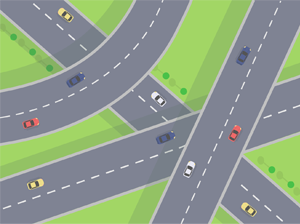
Nitro Type Race is probably the most famous among all free typing games. It is a typing car race game.
In this game, you own the yellow car. The car will be running ahead until the game ends. Once you select your favorable difficulty level, the game will begin. You will see several cars around your car. On each car, you will see a word.
If you target a car and type the word on it, the enemy car will be destroyed. What if you type a letter incorrectly? Your enemy car will fire at you and your car will be damaged. If enemy cars keep damaging your car, you will eventually lose the game.
If you are winning in the beginner level every time, you should try the upper level that is more difficult and requires faster typing speed.
If you want to practice paragraph typing games racing, you should try our TypeRacer game because this game only lets you type different words. There is no paragraph typing option in this game.
Play this fast typing game now
2. Keyboard Games: Ninja Cat
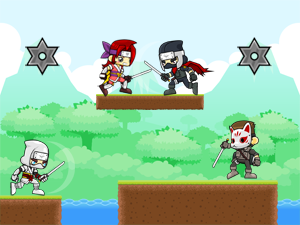
Although you will find Ninja Cat in free typing games, it is not very popular nowadays. Once upon a time, it was very popular in typing practice games.
In this typing practice game, the Ninja Cat fights on behalf of you. When you keep typing correctly, your Ninja Cat will keep attacking the other Ninja man. The man will eventually die. What if you make a mistake? The enemy will immediately attack you and you must take damage in such a case.
Keep typing properly until the result statistics are shown.
Play this fast typing game now
3. Keyboard Games: TypeRacer / Type Racer
TypeRacer is also very popular among free typing games. It is not as popular as the Nitro Type Race game but it is also a very popular typing car race game.
Are you looking for typing test paragraphs? In this game, you will get an opportunity to type paragraphs. There are several cars in this game. You own one of the cars. You will see a random paragraph. Your job is to type each word without making any mistakes. Besides being accurate, you must type fast. Slow typing and mistakes will contribute to losing the game.
You will notice that both accuracy and speed are important in most typing practice games.
Play this fast typing game now
4. Keyboard Games: ZType
Few free typing games could reach and hold the popularity of ZType. As far as we have seen, this game has been popular for 10+ years.
This is a space shooter game. Your task is to shoot down the enemy fighter jets. Each enemy fighter jet has a word around it. You finish typing this word and the enemy fighter jet gets destroyed. Then you target another fighter jet and type its word and then it gets destroyed too. This goes on until the game ends.
Although you are allowed to make mistakes in this game, every mistake will cost your typing words per minute score.
Play this fast typing game now
5. Keyboard Games: Zombie Typing Game Typocalypse
In the list of free typing games, the Zombie typing game was very popular once upon a time. You can see other zombie typing games in other websites too because it was very popular once upon a time. It is still somewhat popular nowadays.
The typing game online idea is pretty simple. Zombies will be approaching you. As soon as they are very near to you, they will immediately kill you. Do you want to kill or get killed? Every zombie brings a word with it. You shoot down the zombie by typing the word. Your job is to keep shooting the approaching zombies.
Other similar typing test games work in a very similar way.
Play this fast typing game now
6. Keyboard Games: Dance Mat Typing
It is also one of the most popular free typing games. It was originally developed by BBC and then others made their own versions of this game because of its high popularity.
Our fast typing game here does not totally match with that of the BBC game. In our version, you will find that a child will be dancing. You keep typing correctly, the child will keep dancing and balloons will fly one after another. You start typing incorrectly, the child stops dancing. So, you see this typing game online has a pretty simple idea.
Please note that this game has a long list of exercises. These exercises cover pretty much everything you need for your typing practice.
Play this fast typing game now
7. Keyboard Games: Keyboard Climber 2
10 (ten) years ago, there were many free typing games and Keyboard Climber 2 was a popular choice. Nowadays this game is not as popular as before.
In this typing game online, you have your player jump above and climb all the top levels. In each level, there is an enemy waiting for you. You type some random letters and you kill the enemy when you finish typing the random letters attached to the enemy. You do not need to take any action to jump upward. As soon as you kill an enemy by typing correctly, your player automatically jumps upward to fight with another enemy.
The only purpose of this game is to help the beginners learn alphabet typing.
Play this fast typing game now
8. Keyboard Games: Just Type This
This game does not take place in free typing games. It is an ordinary typing game.
It is a Mario typing game. It is also a platformer game where Mario keeps running and jumping and thus tries to avoid obstacles. There are many moving obstacles in this typing game online. If Mario hits a moving object, it will die immediately. Although Mario will probably get another life, you should be careful so that you do not make any typing mistake. Even if you make a mistake, keep your mistakes to the minimum number.
This game is basically for beginners who need to practice alphabet typing.
Play this fast typing game now
9. Keyboard Games: Flying Race
This typing game also does not expect any place in popularity in free typing games.
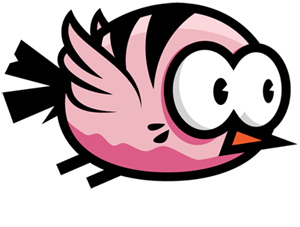
There are several birds in this game. You help one bird to fly fast and win this flying race. When you type fast and correctly, the speed of your bird increases. The speed increases so much that your bird flies past other birds to take the first position. What if you type slowly? What if you type incorrectly? In both these cases, the speed of your bird slows down and it keeps lagging behind. If your typing speed and accuracy does not improve immediately, the chance of your win quickly goes down.
To win in this fast typing game every single time, keep typing fast without making any mistakes.
Play this fast typing game now
10. Keyboard Games: Save The Child
Among all our free typing games, this game is the simplest.
A monster is chasing a child. A child is running for its life. You can help the child to save its life.
At the bottom of the game canvas, you will see a letter from the English alphabet. As soon as you type it, the game begins. Both the child and monster start running. As soon as you type the letters correctly, the child survives. If you keep making typing mistakes, the monster will approach the child fast and kill the child. Your typing speed and accuracy can cost the child's life.
The primary purpose of this typing game online is to help you master typing all letter fast from the English alphabet.
Play this fast typing game now
Bookmark This Page (Ctrl + D)


Typing Test — Top 10 (ten) World Ranking
Get an online typing test certificate now
Please note: We may delete certificates older than 6 (six) months.
Best Score | World Ranking | Countrywise Ranking
Get a Certificate | Register | Log In
WPM = Words per minute
| Sl. | Name | Level | Net WPM | Accuracy | Country |
|---|---|---|---|---|---|
| 1. | Broderick Bagert | Professional | 111 | 99.10% | United States |
| 2. | Farhan | Professional | 93 | 93.96% | Indonesia |
| 3. | Teoh You Le | Professional | 83 | 95.41% | Malaysia |
| 4. | Braeden Edward O'Daniel | Fast | 68 | 97.13% | United States |
| 5. | Laura Elizabeth Ewing | Fast | 67 | 94.38% | United States |
| 6. | Laura Elizabeth Ewing | Fluent | 60 | 93.79% | United States |
| 7. | Laura Elizabeth Ewing | Fluent | 59 | 90.77% | United States |
| 8. | Laura Elizabeth Ewing | Fluent | 56 | 93.29% | United States |
| 9. | Laura Elizabeth Ewing | Fluent | 53 | 82.87% | United States |
| 10. | Osama Abbas hussain | Fluent | 47 | 100.00% | Pakistan |
How we grade your typing speed:
| Level | Net WPM |
|---|---|
| Slow | 0 - 25 |
| Average | 26 - 45 |
| Fluent | 46 - 60 |
| Fast | 61 - 80 |
| Professional | 80+ |
Performance Graph — Based on top 10 (ten) world ranking
Typing Test — Last 25 Practice Results
Get an online typing test certificate now
Please note: We may delete certificates older than 6 (six) months.
Best Score | World Ranking | Countrywise Ranking
Get a Certificate | Register | Log In
The following list shows how some users of this website have performed within last 24 hours.
WPM = Words per minute
How we grade your typing speed:
| Level | Net WPM |
|---|---|
| Slow | 0 - 25 |
| Average | 26 - 45 |
| Fluent | 46 - 60 |
| Fast | 61 - 80 |
| Professional | 80+ |
Performance Graph — Based on last 25 results
Best Keypad Typing Games for Beginners
Imagine sitting in front of your keyboard with your fingers ready, but not quite knowing where to start. Maybe you type with two fingers. Maybe you look down every few seconds. Maybe the number pad feels like a tiny calculator that speaks a secret language.
Now imagine typing words, numbers, names, dates, and prices without staring at your hands. Your fingers move with confidence. Your eyes stay on the screen. You finish schoolwork, emails, forms, and data entry tasks much faster.
Keypad typing games can help you reach that point without turning practice into a boring chore. Instead of repeating the same dull drill, you race cars, catch falling words, solve number challenges, or beat your own score. You practice while playing.
But here is the question most beginners miss: why do some people improve quickly with typing games while others play for weeks and barely get faster?
The answer is not simply “practice more.” It depends on which game you choose, how you use it, and what you focus on during each round. Keep reading, because you will learn the simple practice method that turns keypad typing games from casual entertainment into real typing training.
The Real Problem Beginners Face
Most beginners struggle because typing feels hard at first. Your fingers feel slow. You make mistakes. You forget where keys are. You look down often. This is normal. Every confident typist once felt the same way.
The deeper problem is not a lack of talent. It is a lack of repeated, correct movement. Your brain learns patterns through repetition. Each time you press the correct key with the correct finger, your brain stores a small part of that movement. Do it again and the pattern becomes stronger.
Keypad typing games are useful because they create repetition without making the practice feel endless. You press letters, numbers, spaces, and symbols again and again while trying to score points or complete a challenge. Your brain stays alert because the game gives you a clear goal.
A beginner may think, “I am just playing.” Meanwhile, the hands are learning. That is the hidden power of a good typing game.
Why Keypad Typing Games Work So Well
Your brain pays more attention when an activity feels interesting. A game adds goals, sound, movement, time limits, levels, and rewards. These features make you want to continue.
Keypad typing games also give instant feedback. If you press the wrong key, you see the mistake right away. If you finish a level with better accuracy, the score shows your progress. This immediate response helps you adjust faster than you would while copying text from a page without feedback.
Think about learning to ride a bicycle. Reading about balance helps a little, but you learn mainly by getting on the bike and trying. Typing works in a similar way. You improve by doing the movement many times.
The best keypad typing games make that repeated movement enjoyable. They do not remove the need for effort. They simply make the effort easier to continue.
Keypad, Keyboard, And Number Pad: What Is The Difference?
Beginners sometimes use the words keypad and keyboard as if they mean exactly the same thing. They are related, but they can describe different parts of your computer setup.
A keyboard is the full set of keys used for letters, numbers, punctuation, commands, and shortcuts. It includes the QWERTY letter area, the top number row, the spacebar, the arrow keys, and other controls.
A numeric keypad is the group of number keys usually found on the right side of a full-size keyboard. It often includes 0 through 9, a decimal point, Enter, plus, minus, multiply, and divide. People also call it a number pad or ten-key keypad.
Some keypad typing games teach full keyboard typing. Others focus mainly on the numeric keypad. Both can help beginners, but the right choice depends on your goal.
If you want to write essays, emails, or messages faster, use full keyboard games. If you want to enter prices, phone numbers, dates, measurements, or spreadsheet data, include numeric keypad games in your routine.
Understanding The QWERTY Keyboard Layout
Most American computer keyboards use the QWERTY layout. The name comes from the first six letters on the top letter row: Q, W, E, R, T, and Y.
The most important starting position is the home row. Place your left fingers on A, S, D, and F. Place your right fingers on J, K, L, and the semicolon key. Your thumbs rest near the spacebar.
You may notice small raised marks on the F and J keys. These bumps help you find the home row without looking down. They are like tiny road signs for your index fingers.
After pressing another key, your fingers should return toward the home row. At first, this may feel slow and unnatural. That is fine. Correct movement matters more than speed.
Many keypad typing games begin with home-row letters because they create the foundation for the rest of the keyboard. Once those movements feel natural, the game can add the top row, bottom row, numbers, and symbols.
Understanding The Numeric Keypad Layout
The numeric keypad has its own home position. Place your right index finger on 4, your middle finger on 5, and your ring finger on 6. Your thumb can rest near 0. Your little finger can reach Enter, plus, or other operation keys depending on the task.
The 5 key usually has a small raised mark. This mark helps you find the center of the keypad by touch.
The basic finger paths are simple:
Your index finger handles 1, 4, and 7.
Your middle finger handles 2, 5, and 8.
Your ring finger handles 3, 6, and 9.
Your thumb usually handles 0.
Your little finger often handles Enter and some operation keys.
Numeric keypad typing games repeat these paths until your right hand starts moving automatically. This skill is valuable for data entry, bookkeeping, banking work, retail tasks, inventory records, and spreadsheets.
How To Start Typing The Right Way
Begin with a comfortable sitting position. Place both feet on the floor. Relax your shoulders. Keep your elbows near your sides. Your hands should float lightly over the keyboard rather than pressing down with force.
Put your fingers on the home row. Keep your eyes on the screen. Try not to look down.
You will want to look. Your brain may practically shout, “Just one quick peek!” Resist when you can. Each time you find a key by touch, you strengthen your memory.
Start slowly. Speed comes later. Accuracy comes first.
A good beginner goal is to complete a game round with at least 90 percent accuracy before trying to increase speed. You do not need a perfect score every time. You only need controlled practice.
Why Beginners Stick With Two Fingers
Two-finger typing feels easy because it matches what many people already do. You look for a key, move one finger, press it, and repeat. This method works for short messages, but it becomes slow during longer tasks.
Two-finger typing also makes your eyes move constantly between the keyboard and the screen. That breaks your focus. It can cause more missed letters, repeated words, and typing fatigue.
Keypad typing games help you leave the two-finger habit because the action moves too quickly for searching one key at a time. A well-designed game encourages you to keep your hands in position and use more fingers.
Do not expect to change overnight. Begin by using the correct fingers during slow rounds. Your speed may drop for a few days. That temporary slowdown is part of learning a better method.
How Keypad Typing Games Break Bad Habits
Bad typing habits grow through repetition. Good habits grow the same way.
Suppose a game asks you to type the word “cat.” With touch typing, C is reached by the left middle finger, A by the left little finger, and T by the left index finger. When you repeat the movement correctly, the pattern becomes easier.
Now consider the number 745 on a numeric keypad. Your index finger reaches 7, returns toward 4, and your middle finger presses 5. Repeating short number groups like this teaches your hand to recognize keypad patterns.
Good keypad typing games reward correct movement, quick recognition, and steady rhythm. Over time, random finger hunting changes into planned motion.
Choosing The Right Keypad Typing Games
Not all games teach the same skill. Some focus on speed. Some focus on accuracy. Some use words. Some use letters. Some teach number pad control. Others mix everything together.
Choose games that match your current level. A complete beginner should not start with long paragraphs moving at top speed. That is like learning to swim by jumping into the deepest part of the pool while wearing heavy boots.
Look for games that offer these features:
1. Clear accuracy results.
2. Words-per-minute or characters-per-minute scores.
3. Beginner levels with simple keys.
4. Repeatable practice rounds.
5. Gradually increasing difficulty.
6. Useful feedback after mistakes.
7. A design that is fun enough to keep you practicing.
For numeric practice, choose games that show number sequences, prices, dates, decimal values, or short data-entry patterns. For general typing, choose games that use common English words and short sentences.
Car Race Typing Games
Car race games are popular because the reward is easy to understand. Type correctly, and your car moves faster. Make too many mistakes, and another car may pass you.
These games can improve speed, rhythm, and focus. They are especially useful after you already know the basic key positions.
A beginner should not slam the keys just to win the race. Try to keep a smooth pace. Imagine driving on a road. Sudden bursts followed by crashes do not help. Steady control wins more often.
You can also create a personal challenge. Play the same track three times. During the first round, focus on accuracy. During the second, keep a steady rhythm. During the third, try to beat your best score without losing accuracy.
Word Fall Typing Games
In word fall games, letters or words move down the screen. You must type them before they reach the bottom.
This style develops quick recognition. Your eyes see a word, your brain identifies it, and your fingers respond. That connection is important for fluent typing.
Start with slow falling speed. Type each word completely. Do not jump between several words unless the game requires it. As you improve, increase the level.
Word fall keypad typing games can also support spelling. When you repeatedly type common words such as “because,” “people,” “school,” or “computer,” the correct letter patterns become more familiar.
Space Shooting Typing Games
Space shooting games turn words or numbers into targets. You type the correct text to remove an asteroid, defend a ship, or hit an enemy.
The excitement can make practice feel fast. It can also tempt you to rush. Keep accuracy as your first goal.
For a useful beginner session, choose a level that allows enough time to think. If targets disappear before you can read them, the level is too hard. Lower the speed and build control first.
Numeric Keypad Challenge Games
Numeric games often show number groups that you must enter quickly. A round may include phone numbers, prices, order numbers, dates, or random digits.
These keypad typing games are excellent for people interested in data entry or office work. They teach you to keep your eyes on the screen while the right hand works on the number pad.
Begin with three-digit groups such as 482, 715, and 309. Then move to longer groups such as 58321 or 90746. After that, practice decimals like 14.95, 208.40, and 7.25.
Do not ignore the zero key. Beginners sometimes reach for it with the wrong finger because it sits below the main number block. Practice short patterns such as 10, 20, 100, 502, and 900 until the motion feels easy.
Puzzle And Adventure Typing Games
Puzzle games reward careful thinking. You may unlock a door, solve a clue, build a bridge, or move a character by typing correctly.
These games are good for learners who dislike pressure. They often allow more time than racing or shooting games. That makes them useful for early accuracy practice.
Adventure-based keypad typing games also create a sense of progress. Instead of watching a score alone, you move through a story. One completed level leads to the next. This can help you continue practicing on days when motivation is low.
How Long Should You Practice Every Day?
You do not need to practice for hours. A short daily routine often works better than one long session each weekend.
Ten to fifteen minutes a day is enough for a beginner to build consistency. Fifteen minutes a day adds up to 105 minutes each week. That is more than seven hours of practice in one month without any single session feeling too long.
Long sessions can make your hands tired. Once you are tired, accuracy falls and frustration rises. Stop before your practice becomes sloppy.
A simple schedule might look like this:
Days 1 through 7: Focus on correct finger use and accuracy.
Days 8 through 14: Keep accuracy steady and add a little speed.
Days 15 through 30: Mix word games, number games, and short tests.
After 30 days: Compare your new results with your first week.
The Simple Fifteen-Minute Practice Method
Remember the question from the beginning? Why do some learners improve much faster than others?
Often, they use a balanced practice routine instead of playing random rounds.
Try this fifteen-minute method:
Minutes 1 to 3: Warm up with easy home-row letters or simple number groups.
Minutes 4 to 8: Play one accuracy-focused game. Go slowly and use the correct fingers.
Minutes 9 to 12: Play one speed-focused game at a comfortable level.
Minutes 13 to 15: Repeat the area where you made the most mistakes.
This final step matters. Many people practice only what they already do well because winning feels good. Faster improvement happens when you spend a few minutes on weak keys.
If you often miss Q, P, B, or the number 0, choose keypad typing games that repeat those keys. Weak-key practice may feel less exciting, but it produces the biggest change.
Tracking Your Progress Without Becoming Obsessed
Most typing games show words per minute, accuracy, errors, or completion time. These numbers can motivate you when you use them correctly.
Write down one score at the end of each practice day. Do not record every single round. One daily result is enough.
Your record might look like this:
Day 1: 12 WPM and 86 percent accuracy.
Day 5: 16 WPM and 90 percent accuracy.
Day 10: 21 WPM and 92 percent accuracy.
Day 20: 28 WPM and 95 percent accuracy.
For numeric keypad practice, you might track keystrokes per hour, characters per minute, or the number of correct entries in one minute.
Progress will not rise in a perfect straight line. One day may be slower than the day before. That can happen because you are tired, distracted, or practicing harder material. Look at the weekly trend instead of one score.
Accuracy Before Speed
Many beginners feel pressure to type fast, especially during timed keypad typing games. They chase a higher score and start pressing keys without control.
Speed without accuracy creates bad habits. Every wrong movement teaches your fingers the wrong path.
Imagine learning to shoot a basketball. If you throw as fast as possible with no attention to form, you may repeat the same mistake hundreds of times. If you learn the correct motion slowly, your speed and confidence improve later.
Use the same rule for typing. First, press the right key with the right finger. Then repeat the movement. Speed grows as the movement becomes easier.
A useful target is 90 to 95 percent accuracy during beginner practice. Once you can stay in that range comfortably, increase the game speed a little.
Common Beginner Mistakes
Looking down too often is one of the biggest problems. It slows learning because your eyes solve the problem instead of your fingers and memory.
Another mistake is rushing after one good score. A beginner may reach a personal best and then try to type even faster in every round. Accuracy drops, tension increases, and the hands become less controlled.
Poor posture also causes trouble. Leaning forward, bending the wrists sharply, or lifting the shoulders can make typing uncomfortable.
Some learners practice only easy words. That feels good, but it leaves weak letters untouched.
Others change games every minute. Constant switching can be fun, but it makes it harder to repeat and strengthen one skill.
Choose one or two keypad typing games for a session. Complete several focused rounds. Then review what went wrong.
The Emotional Side Of Learning Typing
Typing can feel frustrating at first. You may feel embarrassed about being slow. You may compare your score with someone who has practiced for years.
Your current level does not define your ability. It only shows where you are starting.
Mistakes are not proof that you are bad at typing. They are information. Each mistake points to a key, finger, or pattern that needs more practice.
Keypad typing games reduce pressure because failure feels temporary. You miss a word, the round continues, and you try again. That playful environment can help you stay calm.
When frustration rises, slow the game down. Complete one easy round with strong accuracy. End the session with a small win.
Fun Challenge Ideas
Challenges add variety and give each practice session a purpose.
Try a zero-look challenge. Play one easy round without looking at the keyboard.
Try a clean-round challenge. Type a short paragraph or number set with no mistakes.
Try a weekly score challenge. Beat your best score from the previous week rather than your score from five minutes ago.
Try a weak-key challenge. Choose one difficult letter or number and practice it for three minutes.
Try a family challenge. Ask a friend, sibling, parent, or classmate to play the same game. Compare accuracy first and speed second.
Try a calm-speed challenge. Type as quickly as you can while keeping your shoulders relaxed and your key presses light.
These small goals make keypad typing games feel fresh without changing the basic learning method.
When Will You Notice Real Improvement?
Some changes appear quickly. After a few days, you may find the home row more easily. After a few weeks, you may look down less often. After a month of regular practice, common words and number patterns may feel much smoother.
Real improvement appears when you stop thinking about every individual key. You see a word and your fingers begin moving as one pattern. You see a price such as 49.95 and your right hand enters it without searching for each digit.
The exact timing differs for every learner. Practice quality, accuracy, hand position, and consistency all matter.
Do not wait for a dramatic overnight change. Notice the small signs: fewer pauses, lighter key presses, better posture, less looking down, and fewer corrections.
How Finger Memory Develops
People often call automatic typing “muscle memory.” Your muscles do not actually store words like a computer file. Your brain builds movement patterns through repeated practice.
At first, typing the word “beginner” may feel like eight separate decisions. Later, your brain recognizes familiar groups such as “be,” “gin,” and “ner.” The movement becomes smoother.
The same thing happens with the numeric keypad. A sequence such as 125 may first feel like three separate searches. After repeated practice, your hand learns the path.
This is why frequent short sessions are effective. You remind your brain of the movement again and again. A single long session followed by six days without practice gives the pattern more time to fade.
Keypad typing games support finger memory because they repeat useful patterns in a focused and active way.
Why Children Benefit From Keypad Typing Games
Children often learn best when an activity feels playful. Bright visuals, simple goals, characters, sound effects, and rewards can keep young learners interested.
A child may not want to complete a page of letter drills. The same child may happily type those letters to help a character cross a river or escape an obstacle.
Games also allow children to repeat without feeling punished. A missed key becomes part of the challenge rather than a red mark on a worksheet.
Parents and teachers should still guide the process. Choose age-appropriate keypad typing games with clear instructions and limited distractions. Encourage correct finger use. Keep sessions short.
Praise effort, accuracy, and improvement. Avoid turning every practice round into a high-pressure competition.
How Adults Can Use Keypad Typing Games
Typing games are not only for children. Adults can use them to improve work speed, confidence, and computer comfort.
Many adults learned to type informally. They may use two or three fingers and look down often. Others need stronger number pad skills for office work, bookkeeping, customer service, inventory, or data entry.
Adults often enjoy race games, puzzle games, timed number challenges, and realistic practice with addresses, dates, prices, or account numbers.
It is never too late to improve. Adults already understand goals, routines, and workplace needs. That can make practice more focused.
Start at a beginner level even if it feels easy. Correct old habits first. Then increase the speed.
Creating A Routine That Keeps You Improving
A useful routine should be simple enough to repeat on busy days.
Choose a regular time. You might practice after breakfast, before homework, during a work break, or before checking social media.
Use the same starting activity each day. For example, complete one home-row game or one easy number-pad round. This signals to your brain that practice has begun.
Then focus on one skill. Do not try to fix speed, posture, every letter, every number, and every symbol in the same session.
Finish with a short test or favorite game. Record one score. Stop.
A routine like this prevents decision fatigue. You do not waste five minutes wondering what to play.
Linking Typing Skills To Real Life
Typing is not just a game skill. It affects many everyday tasks.
Students use typing for homework, online classes, research, tests, and group projects. Faster typing can give them more time to think about their ideas instead of hunting for keys.
Workers use typing for emails, reports, customer notes, schedules, forms, and chat messages. Accurate number-pad use helps with prices, quantities, invoices, and spreadsheet entries.
Job seekers use typing when creating resumes, filling out applications, and completing online skill tests.
Gamers use typing for chat, commands, and quick communication.
Every minute spent on well-chosen keypad typing games builds a skill that can save time later.
Using Keypad Typing Games For Data Entry Practice
Data entry requires more than raw speed. It also requires accuracy, focus, and the ability to copy information without losing your place.
Use numeric keypad games that include realistic patterns. Practice dates such as 07/14/2026. Practice prices such as 18.75 and 240.00. Practice ZIP codes, quantities, percentages, and order numbers.
Keep your eyes on the source information instead of the keypad. Enter one group at a time. Check your result after each short set.
You can also create a simple exercise outside the game. Write ten short number groups on paper. Type them into a blank document or spreadsheet. Compare the typed list with the original.
Be careful with sensitive information. Use made-up numbers for practice. Never type real passwords, bank details, or private account numbers into a public game.
Using Keypad Typing Games To Learn New Words
Many typing games include vocabulary. This means you can improve typing, spelling, and word recognition at the same time.
When a game shows the word “different,” you must notice the letter order before typing it. Repeating common words helps the spelling pattern become familiar.
Beginners should choose games with everyday English words before moving to rare or technical vocabulary. Common words create the greatest benefit for school, work, and daily communication.
You can make the activity stronger by reading the word silently before typing it. After the round, write down three words you misspelled. Practice each one five times slowly.
This turns keypad typing games into a simple language-learning tool as well as a typing tool.
How Sound And Visual Feedback Boost Learning
Typing games often use sounds, colors, score changes, progress bars, and animations. These features show what happened immediately.
A correct word may create a pleasant sound. A mistake may highlight the wrong letter. A progress bar may move after each completed line.
This feedback helps your brain connect an action with a result. You do not have to wait until the end of a page to discover a mistake.
However, too much sound or animation can distract some learners. If you feel overwhelmed, lower the volume or choose a simpler game design.
The best game is not always the loudest or most colorful. It is the one that helps you focus, notice errors, and continue practicing.
Building Good Posture And Hand Position
Typing skill is not only about finger speed. Your whole body affects how comfortably you type.
Sit with your back supported. Keep your shoulders relaxed. Place your feet flat on the floor or on a stable footrest. Keep your elbows near a right angle.
Your wrists should stay in a neutral position. Do not bend them sharply upward or press them heavily against a hard desk edge.
Place the keyboard close enough that you do not need to reach forward. Keep the screen at a comfortable height so you are not constantly bending your neck.
Use light key pressure. Modern keyboards do not need hammer blows. Your keyboard is not a drum, even if a fast game makes you feel like a rock star.
Take a short break if your hands, wrists, shoulders, or neck feel tired. Comfort supports consistency.
Laptop Keyboards And External Numeric Keypads
Many laptops do not include a separate numeric keypad. You can still practice the top number row, but it feels different from ten-key data entry.
Some larger laptops have a built-in number pad on the right. Smaller models may place number functions on other keys and require a special function key.
An external USB or wireless numeric keypad can be useful if your goal is number entry. It gives you the standard 0-through-9 layout without replacing your laptop.
Before buying anything, check your actual need. General typing practice does not require a separate keypad. Full keyboard games work on almost any laptop.
For number-pad keypad typing games, a standard external keypad can make the practice more realistic. Place it where your right hand can reach it comfortably.
Remember To Check Num Lock
If your numeric keypad does not type numbers, Num Lock may be turned off.
Press the Num Lock key once and try again. Some keyboards show a small light when Num Lock is active. On some laptops, you may need to press a function key combination.
When Num Lock is off, certain keypad keys may act like arrows, Home, End, Page Up, or Page Down. This can confuse beginners because pressing 8 may move the cursor instead of typing the number 8.
Check Num Lock before starting numeric keypad typing games. This tiny step can prevent five minutes of staring at the keyboard like it has betrayed you.
How To Practice Difficult Keys
Every learner has weak keys. Common trouble spots include Q, Z, X, P, B, punctuation marks, the top number row, and the keypad zero.
First, identify the problem. Review your game results and notice repeated errors.
Second, slow down. Practice the key in short patterns.
For Q, try “quit,” “queen,” “quick,” and “question.”
For P, try “pen,” “paper,” “people,” and “place.”
For keypad zero, try 10, 20, 100, 205, 500, and 908.
Third, return to a normal game and watch for the key. Do not stare at your hand. Let the correct finger do the work.
A few focused minutes can fix a weak key faster than many unfocused game rounds.
Should You Use A Timer?
A timer can create energy, but it can also create tension.
Complete beginners should first practice without strong time pressure. Learn the key positions and correct fingers. Then add short timed rounds.
One-minute tests are useful for checking speed. Three-minute or five-minute tests show whether you can maintain control for longer.
Do not use a timer in every session. Mix timed keypad typing games with untimed accuracy practice.
A simple weekly plan could include four accuracy sessions, two mixed sessions, and one short speed test. This keeps the timer from controlling your entire learning experience.
How To Know When A Game Is Too Easy
A game may be too easy if you regularly reach 98 to 100 percent accuracy, feel no need to concentrate, and finish each round far below your comfortable speed.
Move up one level. Add longer words, more keys, faster movement, punctuation, or number patterns.
Do not jump several levels at once. The next level should challenge you without causing panic.
A good difficulty level feels like a small stretch. You make a few mistakes, but you understand why they happened and can correct them.
When keypad typing games are always easy, progress slows. When they are always overwhelming, motivation falls. Choose the middle zone.
How To Know When A Game Is Too Hard
A game is probably too hard if you look down constantly, miss more than one out of every ten keys, tense your shoulders, or cannot finish basic rounds.
Lower the speed or return to an earlier lesson. This is not failure. It is smart training.
Imagine lifting weights. You would not start with the heaviest weight in the gym. You choose a level that lets you complete the movement correctly.
Typing works the same way. Build control first. Then increase the challenge.
Making Practice Safe For Children
Parents and teachers should review a typing game before giving it to a child. Check the language, advertisements, chat features, links, and privacy settings.
Choose games that do not ask for unnecessary personal information. A child should not need to share a full name, school, address, phone number, or private account details just to practice typing.
Set a reasonable time limit. Short sessions are usually better than long screen sessions.
Place the computer in a comfortable, supervised area. Encourage breaks, good posture, and relaxed hands.
The goal is to make keypad typing games useful, safe, and enjoyable.
Turning Practice Into A Daily Habit
The easiest way to build a habit is to connect practice with something you already do.
Practice for ten minutes after breakfast. Play one round before homework. Complete a number-pad challenge before opening your email. Use a typing game during a planned work break.
Keep the starting step very small. Tell yourself, “I only need to play one round.” Starting is often the hardest part. Once the game begins, you may complete several rounds.
Use a calendar and mark each practice day. A visible chain of completed days can motivate you to continue.
Missing one day is not a disaster. Return the next day. Do not turn one missed session into a missed month.
A Four-Week Beginner Practice Plan
Week One: Learn The Positions
Practice the home row and basic numeric keypad position. Use slow games. Keep your eyes on the screen as much as possible. Focus on correct fingers.
Week Two: Add More Keys
Add the top and bottom letter rows. Practice number groups with 0 through 9. Keep accuracy near 90 percent or higher.
Week Three: Build Rhythm
Use short words, common sentences, dates, prices, and simple number sequences. Play one race or timed game each day, but do not sacrifice accuracy.
Week Four: Test Real Progress
Complete a one-minute word test and a one-minute number-pad test. Compare the results with your first week. Identify three weak keys and practice them.
This four-week plan gives keypad typing games a clear purpose. You are not just collecting points. You are building a skill in stages.
What To Do When Progress Stops
Almost every learner reaches a plateau. Your score stays the same for several days, and practice begins to feel pointless.
First, check your accuracy. You may be trying to type faster than your current control allows.
Second, change the practice type. If you always race, try a slow puzzle game. If you always type words, add sentences. If you only use the full keyboard, practice the number pad.
Third, focus on weak keys. A few repeated errors can limit your whole score.
Fourth, take a short break. Tired hands and a tired mind do not learn well.
Plateaus are normal. They often appear just before a new movement becomes automatic.
The Long-Term Benefits Of Strong Typing Skills
Typing is a skill you can use for decades. Students use it for assignments and online learning. Workers use it for messages, records, reports, and customer service. Business owners use it for invoices, products, and planning.
Strong typing can reduce the time spent on routine tasks. If you type a little faster and make fewer corrections, each email, form, and document becomes easier.
Numeric keypad skill can be especially useful in jobs that involve money, measurements, inventory, or repeated number entry.
The greatest benefit may be mental freedom. When you no longer think about each key, you can focus on what you want to say or what information you need to enter.
Keypad typing games help build that freedom through small, repeatable steps.
A Simple Beginner Checklist
Before you begin, check your setup.
Sit comfortably.
Relax your shoulders.
Place your fingers on the correct home position.
Turn on Num Lock if you are using the numeric keypad.
Choose a game that matches your level.
Focus on accuracy before speed.
Keep your eyes on the screen.
Practice for ten to fifteen minutes.
Record one result.
Stop if your hands become tired or uncomfortable.
This checklist takes only a few seconds, but it can make every session more useful.
Final Thoughts
Keypad typing games are one of the easiest ways to make typing practice engaging for complete beginners. They turn repeated key presses into races, puzzles, adventures, word challenges, and number-pad drills.
The games work best when you use them with a plan. Start with correct hand position. Choose an easy level. Keep your eyes on the screen. Protect accuracy. Practice weak keys. Track one score. Return the next day.
Do not worry about being perfect. A missed key is not a defeat. It is a clue. It shows you what to practice next.
Begin with one short game today. Place your fingers on the home row or the center of the numeric keypad. Type slowly. Stay relaxed. Let each correct movement teach your brain the path.
With steady practice, the keys will stop feeling like scattered buttons. They will start feeling like familiar places. Your hands will move with less hesitation. Your eyes will stay on your work. And the speed you once thought was impossible will begin to feel normal.
More Resources
- How to Speed Up Typing Speed for Beginners
- Monkey Typing Test 1 Minute to Boost Your Speed
- Speed Typing Exercises for Complete Beginners
- How to Write Faster on Keyboard for Beginners
- Best Fun Typing Tests to Improve Your Speed
- Best Online English Typing Practice Test for Beginners
- Improve Your 40 WPM Typing Speed Online Free
- Best Keyboarding Classes for Beginners Online
- Improve Your Typing Speed in Just Minutes a Day
- Best Online Home Row Typing Practice for Beginners