Touch Typing Race for Beginners to Improve Speed
9 more typing games: (1) Nitro Type (2) Ninja Cat (3) ZType (4) Zombie Typing Game Typocalypse (5) Dance Mat Typing (6) Keyboard Climber 2 (7) Just Type This (8) Flying Race (9) Save The Child
★★★ 168 Typing Lessons ★★★ $375 Course FREE (Limited Time Offer)
To play this game, just type the words inside the blue area under the game canvas.
Complete a Typing Test in 60 Seconds!
144 Free Typing Practice Lessons. Try Now.
Video Tutorial: How to play this game
How to play:

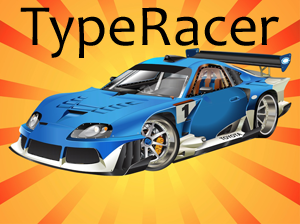
The blue car above is your car. In this TypeRacer / Type Racer game, you should type the words you see just below the game canvas. You should type the words in the input box given below the game canvas. Once you finish typing a line, you will see the next line. Keep typing and keep your competitors behind you.
To select / change difficulty level, please type / press 1, 2, or 3 on your keyboard when you see the game over screen.
You must type fast to win in this TypeRacer / Type Racer game. But every mistake will heavily reduce the chance of winning this game. So, try your best to avoid making mistakes.
In the easy level, you must score minimum 26 words per minute to win. In the medium level, minimum 46 words per minute is required. But in the hard level, you need minimum 81 words per minute to win.
Virtual Gold Medals: If you score more than 80 words per minute, you will get three virtual gold medals which is the highest rank in this game. If you are winning three virtual gold medals every time, you surely have professional typing skill which is a desired skill for many people. But you get two virtual gold medals if score between 61 and 80. Finally, you get only one gold medal for scoring between 46 and 60.
1. Typing Practice » Beginner Level » Home Row (1 - 17)
Practice Lesson 1: Index fingers: J and F
Practice Lesson 2: Middle fingers: K and D
Practice Lesson 3: Review: JFKD
Practice Lesson 4: Ring fingers: S and L
Practice Lesson 5: Pinkie fingers: A and ;
Practice Lesson 6: Index fingers: G and H
Practice Lesson 7: Back and forth
Practice Lesson 8: Left hand keys 1
Practice Lesson 9: Left hand keys 2
Practice Lesson 10: Right hand keys 1
Practice Lesson 11: Right hand keys 2
2. Typing Practice » Beginner Level » Top Row (18 - 32)
Practice Lesson 18: Index fingers: R and U
Practice Lesson 19: Middle fingers: E and I
Practice Lesson 20: Ring fingers: W and O
Practice Lesson 21: Pinkie fingers: Q and P
Practice Lesson 22: Index fingers: T and Y
Practice Lesson 23: Back and forth
Practice Lesson 24: All left hand 1
Practice Lesson 25: All left hand 2
Practice Lesson 26: All right hand 1
Practice Lesson 27: All right hand 2
3. Typing Practice » Beginner Level » Bottom Row (33 - 46)
Practice Lesson 33: Index fingers: V and M
Practice Lesson 34: Middle fingers: C and ,
Practice Lesson 35: Ring fingers: X and .
Practice Lesson 36: Pinkie fingers: Z and /
Practice Lesson 37: Index fingers: B and N
Practice Lesson 38: Back and forth
Practice Lesson 39: All left hand 1
Practice Lesson 40: All left hand 2
Practice Lesson 41: All right hand 1
Practice Lesson 42: All right hand 2
4. Typing Practice » Beginner Level » Miscellaneous (47 - 68)
Practice Lesson 47: Review 1: Left hand words
Practice Lesson 48: Review 2: Right hand words
Practice Lesson 49: Review 3: Alternating hand words
Practice Lesson 50: Capitals 1
Practice Lesson 51: Capitals 2
Practice Lesson 52: Capitals 3
Practice Lesson 53: Capitals 4
Practice Lesson 62: Numeric Keypad 1
Practice Lesson 63: Numeric Keypad 2
Practice Lesson 64: Numeric Keypad 3
Practice Lesson 65: Numeric Keypad 4
Practice Lesson 66: Easy Words
Practice Lesson 67: Easy Words
Practice Lesson 68: Easy Words
5. Typing Practice » Intermediate Level (69 - 110)
Practice Lesson 69: Common Letter Combinations - CK
Practice Lesson 70: Common Letter Combinations - CH
Practice Lesson 71: Common Letter Combinations - PH
Practice Lesson 72: Common Letter Combinations - GH
Practice Lesson 73: Common Letter Combinations - TH
Practice Lesson 74: Common Letter Combinations - DG
Practice Lesson 75: Common Letter Combinations - ION
Practice Lesson 76: Common Letter Combinations - OUS
Practice Lesson 77: Common Letter Combinations - ATE
Practice Lesson 78: Common Letter Combinations - QU
Practice Lesson 79: Common Letter Combinations - IAL
Practice Lesson 80: Common Letter Combinations - ENT
Practice Lesson 81: Common Letter Combinations - ER
Practice Lesson 82: Common Letter Combinations - GRA
Practice Lesson 83: Common Letter Combinations - OR
Practice Lesson 84: Common Letter Combinations - ABLE
Practice Lesson 85: Common Letter Combinations - IC
Practice Lesson 86: Common Letter Combinations - EI
Practice Lesson 87: Common Letter Combinations - ACY
Practice Lesson 88: Common Letter Combinations - EX
Practice Lesson 89: Common Letter Combinations - ON
Practice Lesson 90: Common Letter Combinations - IN
Practice Lesson 91: Common Letter Combinations - ING
Practice Lesson 92: Common Letter Combinations - ARY
Practice Lesson 93: Common Letter Combinations - LY
Practice Lesson 94: Common Letter Combinations - GY
Practice Lesson 95: Common Letter Combinations - ED
Practice Lesson 96: Common Letter Combinations - AL
Practice Lesson 97: Common Letter Combinations - TRAN
Practice Lesson 98: Common phrase practice 1
Practice Lesson 99: Common phrase practice 2
Practice Lesson 100: Common phrase practice 3
Practice Lesson 101: Common phrase practice 4
Practice Lesson 102: Common phrase practice 5
Practice Lesson 103: Common phrase practice 6
Practice Lesson 104: Common phrase practice 7
Practice Lesson 105: Common phrase practice 8
Practice Lesson 106: Common phrase practice 9
Practice Lesson 107: Common phrase practice 10
Practice Lesson 108: Common phrase practice 11
Practice Lesson 109: Common phrase practice 12
Practice Lesson 110: Common phrase practice 13
6. Typing Practice » Advanced Level (111 - 144)
Practice Lesson 111: Using Right Hand SHIFT Key
Practice Lesson 112: Using Left Hand SHIFT key
Practice Lesson 113: Using Each SHIFT Key
Practice Lesson 114: Left hand only - short words
Practice Lesson 115: Left hand only - longer words
Practice Lesson 116: Right hand only - easy words
Practice Lesson 117: Right hand only - harder words
Practice Lesson 118: Words with alternate hands letters
Practice Lesson 119: Numbers and Special Characters - Left hand
Practice Lesson 120: Numbers and Special Characters - Right hand
Practice Lesson 121: Numbers and Special Characters - Left hand - More difficult
Practice Lesson 122: Numbers and Special Characters - Right hand - More difficult
Practice Lesson 123: Tongue twisters 1
Practice Lesson 124: Tongue twisters 2
Practice Lesson 125: Tongue twisters 3
Practice Lesson 126: Tongue twisters 4
Practice Lesson 127: Tongue twisters 5
Practice Lesson 128: Tongue twisters 6
Practice Lesson 129: Tongue twisters 7
Practice Lesson 130: Tongue twisters 8
Practice Lesson 131: Tongue twisters 9
Practice Lesson 132: Tongue twisters 10
Practice Lesson 133: Tongue twisters 11
Practice Lesson 134: Tongue twisters 12
Practice Lesson 135: Tongue twisters 13
Practice Lesson 136: Tongue twisters 14
Practice Lesson 137: Tongue twisters 15
Practice Lesson 138: Tongue twisters 16
Practice Lesson 139: Tongue twisters 17
Practice Lesson 140: Tongue twisters 18
Practice Lesson 141: Tongue twisters 19
Practice Lesson 142: Tongue twisters 20
Practice Lesson 143: The hardest words to type 1
Practice Lesson 144: The hardest words to type 2
7. Typing Practice » Miscellaneous (145 - 166)
Practice Lesson 145: Alphanumeric Typing Test: 1
Practice Lesson 146: Alphanumeric Typing Test: 2
Practice Lesson 147: Alphanumeric Typing Test: 3
Practice Lesson 148: Alphanumeric Typing Test: 4
Practice Lesson 149: Alphanumeric Typing Test: 5
Practice Lesson 150: Alphanumeric Typing Test: 6
Practice Lesson 151: Alphanumeric Typing Test: 7
Practice Lesson 152: Alphanumeric Typing Test: 8
Practice Lesson 153: Alphanumeric Typing Test: 9
Practice Lesson 154: Alphanumeric Typing Test: 10
Practice Lesson 155: English Alphabet Typing Test
Practice Lesson 156: ASDF JKL; - Home-Row Practice
Practice Lesson 157: QWERT YUIOP - Top-Row Practice
Practice Lesson 158: ZXCVB NM,./ - Bottom-Row Practice
Practice Lesson 159: Left Hand Typing Practice
Practice Lesson 160: Right Hand Typing Practice
Practice Lesson 161: Symbols & Special Character
Practice Lesson 162: Numbers & symbols
Practice Lesson 163: Random Word Typing
Practice Lesson 164: Common Word Typing
Practice Lesson 165: Legal Typing Test
Practice Lesson 166: Medical Typing Practice
Practice Lesson 167: Home-Row Typing Practice Words
Practice Lesson 168: Home-Row and Upper Row Typing Practice Words
Online Typing Test in English
1 Minute Typing Test
2 Minute Typing Test
3 Minute Typing Test
5 Minute Typing Test
10 Minute Typing Test
10 Typing Games / Typewriting Games






Bookmark This Page (Ctrl + D)


Typing Test — Top 10 (ten) World Ranking
Get an online typing test certificate now
Please note: We may delete certificates older than 6 (six) months.
Best Score | World Ranking | Countrywise Ranking
Get a Certificate | Register | Log In
WPM = Words per minute
| Sl. | Name | Level | Net WPM | Accuracy | Country |
|---|---|---|---|---|---|
| 1. | Broderick Bagert | Professional | 111 | 99.10% | United States |
| 2. | Farhan | Professional | 93 | 93.96% | Indonesia |
| 3. | Teoh You Le | Professional | 83 | 95.41% | Malaysia |
| 4. | Fluffy Toucan | Fast | 73 | 88.01% | Albania |
| 5. | Fluffy Toucan | Fast | 71 | 92.25% | Albania |
| 6. | Laura Elizabeth Ewing | Fast | 67 | 94.38% | United States |
| 7. | Laura Elizabeth Ewing | Fluent | 60 | 93.79% | United States |
| 8. | abdullah mashia | Fluent | 59 | 98.34% | Puerto Rico |
| 9. | Laura Elizabeth Ewing | Fluent | 59 | 90.77% | United States |
| 10. | Damyan Todorov | Fluent | 57 | 93.49% | Bulgaria |
How we grade your typing speed:
| Level | Net WPM |
|---|---|
| Slow | 0 - 25 |
| Average | 26 - 45 |
| Fluent | 46 - 60 |
| Fast | 61 - 80 |
| Professional | 80+ |
Performance Graph — Based on top 10 (ten) world ranking
Typing Test — Last 25 Practice Results
Get an online typing test certificate now
Please note: We may delete certificates older than 6 (six) months.
Best Score | World Ranking | Countrywise Ranking
Get a Certificate | Register | Log In
The following list shows how some users of this website have performed within last 24 hours.
WPM = Words per minute
How we grade your typing speed:
| Level | Net WPM |
|---|---|
| Slow | 0 - 25 |
| Average | 26 - 45 |
| Fluent | 46 - 60 |
| Fast | 61 - 80 |
| Professional | 80+ |
Performance Graph — Based on last 25 results
Touch Typing Race for Beginners to Improve Speed
Have you ever watched someone type so fast that their fingers almost look like they are dancing across the keyboard? It feels like magic. But here is the real secret: it is not magic at all. It is a skill that anyone can learn, even if you are just starting out. And in this blog, we are going to explore a fun and motivating way to build that skill: the touch typing race. But here is the twist. The more you play the touch typing race, the more your brain and fingers start working together in a way you might not expect. And once that happens, something amazing begins to change in your typing speed. We will reveal exactly how that happens soon. But first, let’s talk about what a touch typing race actually is and why it can help you type faster than almost any other method you have tried.
Understanding The Touch Typing Race
When people think of learning to type, they often think of boring lessons, slow drills, and typing random sentences for what feels like forever. The touch typing race is the opposite of that. A touch typing race is an online typing challenge where you compete either against the clock or against other players to type a given text accurately and quickly. The goal is simple: type a passage correctly as fast as you can. But what makes the touch typing race so powerful is the environment it creates. It adds excitement. It adds adrenaline. It gives you a reason to try harder than ever before. And that energy boosts learning speed.
Why Touch Typing Matters for Beginners
Touch typing means typing without looking at the keyboard. You use muscle memory instead of your eyes. At first, this feels strange. Most beginners look at the keyboard to find every letter. But when you learn touch typing, something new happens. Your fingers start to remember the position of each key. Over time, typing becomes automatic. Just like riding a bicycle. You do not have to look down to see the pedals. Your body knows what to do. A touch typing race helps reinforce this muscle memory faster, because the combination of speed and pressure makes your brain focus harder. And when the brain focuses harder, it learns faster.
Why the Touch Typing Race Is So Effective
There are many ways to practice typing. You can take typing lessons. You can type quotes or sentences. You can write emails. But the touch typing race stands out because it introduces three learning factors:
1. Pressure
2. Competition
3. Repetition
Pressure helps you concentrate. Competition keeps you motivated. Repetition builds muscle memory. When these three work together, typing speed can improve more rapidly.
How Touch Typing Race Builds Confidence
At the beginning, you might type slowly. Maybe you feel nervous. Maybe you make mistakes. But every time you try another touch typing race, you improve a little. Your hands relax. Your eyes stop looking down. Your speed increases naturally. Small progress, repeated many times, results in big confidence. And confidence is one of the most important parts of learning any new skill. When you feel confident, you keep going. When you keep going, you become unstoppable.
Setting Up Your Keyboard Posture
Before jumping into your first touch typing race, it is important to set up your hands and posture the right way. Here is the simple setup:
Sit straight in your chair.
Place your feet flat on the floor.
Keep your elbows close to your sides.
Place your fingers on the home row: ASDF for the left hand and JKL; for the right hand.
Your thumbs should rest gently on the space bar.
This is your base. Your fingers will move from here to reach other keys, but they always return back to these home row keys.
Learning The Home Row Keys
The home row keys are the starting point of touch typing. When you participate in a touch typing race, you will rely heavily on these keys. Here is how to remember:
S - Ring finger
D - Middle finger
F - Index finger
Right hand:
J - Index finger
K - Middle finger
L - Ring finger
Your fingers should always return to these letters after pressing any other key. Think of the home row as “home base”. You leave, you return, you leave, you return. Just like in a game of tag.
How to Stop Looking at the Keyboard
One of the biggest challenges beginners face is wanting to look at the keyboard. Looking down slows you down. It breaks your flow. To train your brain, try this exercise:
Cover your hands with a thin cloth or piece of paper while typing.
This forces your brain to rely on memory, not sight.
It may feel uncomfortable at first, but it works quickly.
The Role of Accuracy in Touch Typing Race
Many beginners think speed is the most important part of the touch typing race. But speed means nothing without accuracy. If you type fast but make many mistakes, your speed score drops. Instead, focus on being accurate first. Speed will follow automatically.
Begin with slow races where your goal is accuracy, not speed.
Once you can type accurately without looking, speed will happen naturally.
Using the Touch Typing Race to Track Progress
One of the best parts of a touch typing race is that you can see your improvement in real numbers. Most race platforms show:
Words per minute (WPM)
Accuracy percentage
These numbers help you see your progress clearly. Even small improvements matter. If you go from 20 WPM to 22 WPM, that is progress. Celebrate that. Progress adds up quickly.
Fun Ways to Stay Motivated During Practice
Practice can get boring if it is the same every day. Here are ways to make it enjoyable:
Race against your friends
Try to beat your own high score
Challenge yourself with new words
Play fast-paced touch typing race games
Join online typing groups for weekly challenges
When learning is fun, learning becomes easy.
Building Muscle Memory Through Repetition
Muscle memory is what allows your hands to type automatically. The more you practice the touch typing race, the stronger your muscle memory becomes. At first, your fingers may feel unsure. But with time and repetition, your hands will move without thinking. This is when real speed happens.
Using Short Practice Sessions
Instead of practicing for one hour straight, try short bursts:
Practice 10 minutes a day.
Do three touch typing race sessions.
Take a break in between.
Short sessions keep your brain fresh. They also help avoid frustration.
Dealing With Frustration
It is normal to get frustrated if your speed does not increase immediately. Everyone struggles at first. Remember this:
Slow is smooth.
Smooth becomes fast.
Focus on clean typing and accuracy. Your speed will grow.
Examples of Real Improvement
Let’s imagine two beginners: Emma and Ryan.
Emma practices typing for one hour nonstop with no races.
Ryan practices typing using touch typing races for 10 minutes each day.
After two weeks:
Emma improves slightly.
Ryan improves more because the excitement of racing keeps his brain active and interested.
This is the power of competition and repetition.
How Long Does It Take to Get Fast
For most beginners:
1 to 2 weeks of practice: 20 to 35 WPM
3 to 5 weeks of practice: 35 to 50 WPM
2 to 3 months of practice: 50 to 70+ WPM
Your results depend on consistency, not talent. Anyone can improve.
Why Beginners Quit Too Early
Many people quit because they feel slow in the beginning. But everyone starts slow. Even expert typists once typed at 10 WPM. The difference between them and beginners who quit is simple:
They kept going.
What Happens When You Keep Going
Here is the curiosity loop we hinted at earlier.
When your brain and fingers practice touch typing race repeatedly, they begin syncing. Your fingers no longer think about each key. Your mind only focuses on the next word. And then something exciting happens:
Typing becomes effortless.
You stop thinking.
Your hands move automatically.
Your speed increases without trying.
This is the breakthrough moment. And it is coming for you if you keep practicing.
Tips to Maximize Touch Typing Race Improvement
Practice every day, even if just for a few minutes.
Focus on accuracy before speed.
Use the home row position consistently.
Avoid looking at the keyboard.
Keep posture relaxed.
Small habits create big results.
The Science Behind Finger Memory
When you participate in a touch typing race regularly, something interesting happens inside your brain. Each time you repeat a key movement, your brain builds a stronger neural pathway for that movement. Over time, the brain begins to send signals to your fingers faster than before. This is how muscle memory forms. At first, you must think before pressing each key. With repetition, your hands start to move automatically. This is why consistency matters more than long practice sessions. Small daily practice sends the message to your brain that typing is important and needs to become automatic. Before long, your hands will know where every key is without needing your eyes.
Why Your Keyboard Type Matters
There are different kinds of keyboards. Some are soft and quiet. Some are clicky and loud. Some require more pressure to press the keys. When practicing the touch typing race, choosing a keyboard that feels comfortable to your fingers is very important. A too-stiff keyboard can make your fingers tired quickly. A too-soft keyboard might lead to accidental key presses. Beginners often find membrane keyboards easier because they are quiet and light. But many fast typists prefer mechanical keyboards because they provide a clear tactile feel. You can experiment to see which one feels natural to you. Comfort helps you stay focused during your touch typing race practice sessions.
Using Warm-Up Exercises
Just like a runner warms up before a race, your fingers also need to warm up before a touch typing race. Simple warm-up drills can improve speed and accuracy before you start. Here is a quick warm-up you can try:
Type the home row: asdf jkl; repeatedly for one minute
Type common letter pairs like th, st, re, and er
Type short simple words such as cat, dog, sun, and map
These warm-ups prepare your fingers and reduce mistakes when you begin your race. They also help you relax, which improves your speed naturally.
Learning Through Common Mistakes
Every beginner makes mistakes when they start touch typing. The important part is noticing the patterns. For example, if you often mistype the letter B, that means your left hand needs more practice reaching that key. Instead of feeling frustrated, treat mistakes as hints. Each mistake reveals where you need extra attention. You can even keep a small list of the letters or words that challenge you and practice them for five minutes before each touch typing race. Over time, the errors decrease, and your typing becomes cleaner and smoother.
Why Your Eyes Should Stay on the Screen
In a touch typing race, looking down at your keyboard breaks your rhythm. It slows you down and causes more mistakes. Your eyes should stay on the screen at all times. This helps your brain focus on the upcoming words rather than searching for keys. If you find yourself wanting to look down, try a simple trick. Slightly tilt your keyboard away from view. When you cannot see the keys easily, your brain is forced to use memory instead of sight. This may feel uncomfortable at first, but after a few days of practice, your accuracy will improve naturally.
Taking Breaks to Prevent Hand Strain
Typing for long periods without rest can strain your hands and wrists. During a touch typing race, your fingers move quickly and repeatedly. To avoid discomfort, take short breaks. Every 15 minutes, rest your hands for at least 20 to 30 seconds. Gently stretch your fingers, rotate your wrists, and relax your shoulders. These small breaks help maintain long-term typing health. Learning to type fast should never come at the cost of hurting your hands.
Building a Daily Typing Routine
Consistency is the key to improving in a touch typing race. A routine helps you track progress and stay motivated. A simple routine could look like this:
Warm up your fingers for two minutes
Do one slow accuracy-focused race
Do two moderate-paced races
Try to beat your best score with one faster race
Review your accuracy and mistakes
This routine takes only 10 to 12 minutes a day and steadily increases your speed over time. What matters is not how long you practice, but how regularly you show up.
Enjoying the Journey
Learning touch typing does not need to be boring. The touch typing race turns learning into a challenge. Each race is a chance to grow a little faster and a little more confident. Remember that every fast typist you see today once struggled just like you. Progress is not always visible day by day, but when you look back after a few weeks of consistent practice, the improvement becomes clear and rewarding. Keep going. The journey is just as important as the result.
Choosing Your Typing Environment
Where you practice can influence how quickly you improve in a touch typing race. A quiet environment helps you focus better, especially when you are still building your base skills. If you are easily distracted by sound, try turning off music or background noise while practicing. If you enjoy sound, soft instrumental music can help you relax. Another tip is to maintain good lighting. If your screen is too dim or your room is dark, your eyes will get tired faster. A comfortable environment helps your mind stay calm and focused during the touch typing race, which leads to better results over time.
Understanding Words Per Minute
Words per minute, or WPM, is the main measure used in touch typing race games. WPM shows how fast you can type with accuracy. One word is counted as five characters. If you type 50 characters in one minute, that is equal to 10 WPM. Beginners usually start somewhere between 15 to 30 WPM, and that is perfectly okay. Improvement happens with steady practice. Your accuracy score also matters. Even if your speed is high, too many mistakes can lower your final score. So, try to balance both speed and accuracy while racing.
Exploring Different Text Types in Races
Touch typing race platforms often offer a variety of text styles. Some races use simple sentences. Others use paragraphs with punctuation. Some may even include tricky words and symbols. Practicing different text types helps build flexibility. For example, typing sentences with commas and periods helps train your finger rhythm. Typing words with capital letters teaches you to use the shift key smoothly. Every text type teaches a different typing skill. When you rotate through different race formats, your typing ability becomes stronger and more adaptable.
Tracking Personal Records
One fun and motivating way to keep improving is to track your personal best scores. Write down your highest WPM and accuracy each week. This could be in a small notebook or inside a notes app on your phone. When you see your numbers gradually rising, it feels rewarding and encouraging. You may notice some weeks show faster progress than others. Progress is not always a straight line. Some days you might feel slow, and other days everything might feel smooth. Keep your attention on your long-term journey instead of daily ups and downs.
Competing With Friends and Family
If you know someone who also wants to improve their typing speed, practicing together adds a fun layer of competition. You could both enter the same touch typing race and compare your scores at the end. Even if one person is faster, the friendly challenge motivates both players to push a little harder. Encouragement also matters. Celebrate each other's progress and small wins. A supportive environment makes practicing more enjoyable and consistent.
Using Short Words to Build Rhythm
Typing rhythm is an important part of improving your speed. Rhythm means typing words in a smooth and steady flow instead of stopping between each key. One effective exercise is to type short, simple words repeatedly. Words like and, the, for, get, you, and are can help train your typing rhythm. Try typing a row of these words quickly while staying relaxed. Once your hands learn to move smoothly on short words, it becomes easier to handle longer sentences in a touch typing race.
Preparing Your Mind Before Each Practice
Before starting a touch typing race session, take a few deep breaths. This helps clear your mind and reduces stress. When your mind is calm, your fingers move more smoothly. If you start feeling tense or rushed during practice, pause for a moment. Take another deep breath. Then continue. Staying relaxed is one of the most important parts of typing fast. Tension slows you down more than mistakes do.
Celebrating Small Improvements
Every tiny improvement is a success. Even one extra word per minute is progress. Even a one percent increase in accuracy is progress. Treat every improvement like a victory. This positive mindset helps you stay motivated. Learning to type fast is not about perfection. It is about growth. And every day you practice the touch typing race, you are growing, even if you cannot see it immediately. Keep going. The results will come.
Conclusion: Your Typing Journey Starts Today
Learning to type faster is like learning any other skill. It takes patience, repetition, and the right method. The touch typing race is one of the most powerful tools to build speed, accuracy, confidence, and muscle memory. You do not need to be fast today. You only need to start today. Every race you take brings you closer to the moment where typing becomes effortless and fast. And that moment could be much closer than you think.
Keep practicing. Keep racing. Your speed story is just beginning.
More Resources
- Check My Words Per Minute Online Free Test
- Best Free Speed Typing Test Car Games for Beginners
- Best Online Typing Test Tutor for Beginners
- Best Exercises to Improve Typing Speed for Free
- Best Typing Test in English Online Free
- Best Online Typing Test English 10 Minutes Free
- Master Virtual Typing Keyboard Skills Fast
- Master Speed With Typing Test Ratatype Online
- Practice Typing Online to Boost Your WPM Score
- Proper Keyboard Typing for Complete Beginners