Keyboard Climber: The Ultimate Typing Challenge
9 more typing games: (1) Nitro Type (2) Ninja Cat (3) TypeRacer / Type Racer (4) ZType (5) Zombie Typing Game Typocalypse (6) Dance Mat Typing (7) Just Type This (8) Flying Race (9) Save The Child
★★★ 168 Typing Lessons ★★★ $375 Course FREE (Limited Time Offer)
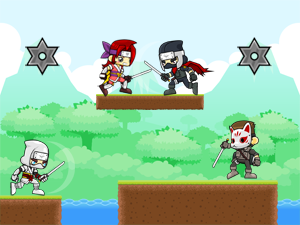
To start the game, just start typing the text above the nearest enemy ninja.
Complete a Typing Test in 60 Seconds!
144 Free Typing Practice Lessons. Try Now.
Video Tutorial: How to play this game
How to play:

In this Keyboard Climber 2 game, the ninja above is your player. Your mission is to defeat all other ninjas by typing the text above enemy ninjas.
Once you finish typing the text above the enemy ninja, the player will automatically reach near the next enemy ninja. This will go on until you finish all text. When you finish the current level, you can play again or go to the next level. To go to the next level, press the spacebar. To play again, click on the game canvas.
You must score at least 15 words per minute to win.
You must type fast to win every time in this game.
Virtual Gold Medals: If you score more than 80 words per minute, you will get three virtual gold medals which is the highest rank in this game. If you are winning three virtual gold medals every time, you surely have professional typing skill which is a desired skill for many people. But you get two virtual gold medals if score between 61 and 80. Finally, you get only one virtual gold medal for scoring between 46 and 60.
We have a total of 144 complete levels. But we recommend before you play this game, you should play the Dancing Mat Typing game or practice the 144 typing lessons to make sure you are using the correct fingers to type.
Keyboard Climber 2 is the updated version of Keyboard Climber 1. This kids climber game is different from tvokids keyboard climber or monkey climber which is one of the tvokids games.
If you want to skip one or more levels and directly go to any other level, please use the following keyboardclimber levels.
Keyboard Climber 2: Level 1: Home Row - Index fingers: J and F
Keyboard Climber 2: Level 2: Home Row - Middle fingers: K and D
Keyboard Climber 2: Level 3: Home Row - Review: JFKD
Keyboard Climber 2: Level 4: Home Row - Ring fingers: S and L
Keyboard Climber 2: Level 5: Home Row - Pinkie fingers: A and ;
Keyboard Climber 2: Level 6: Home Row - Index fingers: G and H
Keyboard Climber 2: Level 7: Home Row - Back and forth
Keyboard Climber 2: Level 8: Home Row - Left hand keys 1
Keyboard Climber 2: Level 9: Home Row - Left hand keys 2
Keyboard Climber 2: Level 10: Home Row - Right hand keys 1
Keyboard Climber 2: Level 11: Home Row - Right hand keys 2
Keyboard Climber 2: Level 12: Home Row Review 1
Keyboard Climber 2: Level 13: Home Row Review 2
Keyboard Climber 2: Level 14: Home Row Review 3
Keyboard Climber 2: Level 15: Home Row Review 4
Keyboard Climber 2: Level 16: Home Row Review 5
Keyboard Climber 2: Level 17: Home Row Review 6
Keyboard Climber 2: Level 18: Top Row - Index fingers: R and U
Keyboard Climber 2: Level 19: Top Row - Middle fingers: E and I
Keyboard Climber 2: Level 20: Top Row - Ring fingers: W and O
Keyboard Climber 2: Level 21: Top Row - Pinkie fingers: Q and P
Keyboard Climber 2: Level 22: Top Row - Index fingers: T and Y
Keyboard Climber 2: Level 23: Top Row - Back and forth
Keyboard Climber 2: Level 24: Top Row - All left hand 1
Keyboard Climber 2: Level 25: Top Row - All left hand 2
Keyboard Climber 2: Level 26: Top Row - All right hand 1
Keyboard Climber 2: Level 27: Top Row - All right hand 2
Keyboard Climber 2: Level 28: Top Row Review 1
Keyboard Climber 2: Level 29: Top Row Review 2
Keyboard Climber 2: Level 30: Top Row Review 3
Keyboard Climber 2: Level 31: Top Row Review 4
Keyboard Climber 2: Level 32: Top Row Review 5
Keyboard Climber 2: Level 33: Bottom Row - Index fingers: V and M
Keyboard Climber 2: Level 34: Bottom Row - Middle fingers: C and ,
Keyboard Climber 2: Level 35: Bottom Row - Ring fingers: X and .
Keyboard Climber 2: Level 36: Bottom Row - Pinkie fingers: Z and /
Keyboard Climber 2: Level 37: Bottom Row - Index fingers: B and N
Keyboard Climber 2: Level 38: Bottom Row - Back and forth
Keyboard Climber 2: Level 39: Bottom Row - All left hand 1
Keyboard Climber 2: Level 40: Bottom Row - All left hand 2
Keyboard Climber 2: Level 41: Bottom Row - All right hand 1
Keyboard Climber 2: Level 42: Bottom Row - All right hand 2
Keyboard Climber 2: Level 43: Bottom Row Review 1
Keyboard Climber 2: Level 44: Bottom Row Review 2
Keyboard Climber 2: Level 45: Bottom Row Review 3
Keyboard Climber 2: Level 46: Bottom Row Review 4
Keyboard Climber 2: Level 47: Review 1: Left hand words
Keyboard Climber 2: Level 48: Review 2: Right hand words
Keyboard Climber 2: Level 49: Review 3: Alternating hand words
Keyboard Climber 2: Level 50: Capitals 1
Keyboard Climber 2: Level 51: Capitals 2
Keyboard Climber 2: Level 52: Capitals 3
Keyboard Climber 2: Level 53: Capitals 4
Keyboard Climber 2: Level 54: Numbers 1
Keyboard Climber 2: Level 55: Numbers 2
Keyboard Climber 2: Level 56: Numbers 3
Keyboard Climber 2: Level 57: Numbers 4
Keyboard Climber 2: Level 58: Symbols 1
Keyboard Climber 2: Level 59: Symbols 2
Keyboard Climber 2: Level 60: Symbols 3
Keyboard Climber 2: Level 61: Symbols 4
Keyboard Climber 2: Level 62: Numeric Keypad 1
Keyboard Climber 2: Level 63: Numeric Keypad 2
Keyboard Climber 2: Level 64: Numeric Keypad 3
Keyboard Climber 2: Level 65: Numeric Keypad 4
Keyboard Climber 2: Level 66: Easy Home Row Words
Keyboard Climber 2: Level 67: Easy Top Row Words
Keyboard Climber 2: Level 68: Easy Bottom Row Words
Keyboard Climber 2: Level 69: Intermediate Level: Common Letter Combinations - CK
Keyboard Climber 2: Level 70: Intermediate Level: Common Letter Combinations - CH
Keyboard Climber 2: Level 71: Intermediate Level: Common Letter Combinations - PH
Keyboard Climber 2: Level 72: Intermediate Level: Common Letter Combinations - GH
Keyboard Climber 2: Level 73: Intermediate Level: Common Letter Combinations - TH
Keyboard Climber 2: Level 74: Intermediate Level: Common Letter Combinations - DG
Keyboard Climber 2: Level 75: Intermediate Level: Common Letter Combinations - ION
Keyboard Climber 2: Level 76: Intermediate Level: Common Letter Combinations - OUS
Keyboard Climber 2: Level 77: Intermediate Level: Common Letter Combinations - ATE
Keyboard Climber 2: Level 78: Intermediate Level: Common Letter Combinations - QU
Keyboard Climber 2: Level 79: Intermediate Level: Common Letter Combinations - IAL
Keyboard Climber 2: Level 80: Intermediate Level: Common Letter Combinations - ENT
Keyboard Climber 2: Level 81: Intermediate Level: Common Letter Combinations - ER
Keyboard Climber 2: Level 82: Intermediate Level: Common Letter Combinations - GRA
Keyboard Climber 2: Level 83: Intermediate Level: Common Letter Combinations - OR
Keyboard Climber 2: Level 84: Intermediate Level: Common Letter Combinations - ABLE
Keyboard Climber 2: Level 85: Intermediate Level: Common Letter Combinations - IC
Keyboard Climber 2: Level 86: Intermediate Level: Common Letter Combinations - EI
Keyboard Climber 2: Level 87: Intermediate Level: Common Letter Combinations - ACY
Keyboard Climber 2: Level 88: Intermediate Level: Common Letter Combinations - EX
Keyboard Climber 2: Level 89: Intermediate Level: Common Letter Combinations - ON
Keyboard Climber 2: Level 90: Intermediate Level: Common Letter Combinations - IN
Keyboard Climber 2: Level 91: Intermediate Level: Common Letter Combinations - ING
Keyboard Climber 2: Level 92: Intermediate Level: Common Letter Combinations - ARY
Keyboard Climber 2: Level 93: Intermediate Level: Common Letter Combinations - LY
Keyboard Climber 2: Level 94: Intermediate Level: Common Letter Combinations - GY
Keyboard Climber 2: Level 95: Intermediate Level: Common Letter Combinations - ED
Keyboard Climber 2: Level 96: Intermediate Level: Common Letter Combinations - AL
Keyboard Climber 2: Level 97: Intermediate Level: Common Letter Combinations - TRAN
Keyboard Climber 2: Level 98: Intermediate Level: Common phrase practice 1
Keyboard Climber 2: Level 99: Intermediate Level: Common phrase practice 2
Keyboard Climber 2: Level 100: Intermediate Level: Common phrase practice 3
Keyboard Climber 2: Level 101: Intermediate Level: Common phrase practice 4
Keyboard Climber 2: Level 102: Intermediate Level: Common phrase practice 5
Keyboard Climber 2: Level 103: Intermediate Level: Common phrase practice 6
Keyboard Climber 2: Level 104: Intermediate Level: Common phrase practice 7
Keyboard Climber 2: Level 105: Intermediate Level: Common phrase practice 8
Keyboard Climber 2: Level 106: Intermediate Level: Common phrase practice 9
Keyboard Climber 2: Level 107: Intermediate Level: Common phrase practice 10
Keyboard Climber 2: Level 108: Intermediate Level: Common phrase practice 11
Keyboard Climber 2: Level 109: Intermediate Level: Common phrase practice 12
Keyboard Climber 2: Level 110: Intermediate Level: Common phrase practice 13
Keyboard Climber 2: Level 111: Advanced Level: Using Right Hand SHIFT Key
Keyboard Climber 2: Level 112: Advanced Level: Using Left Hand SHIFT key
Keyboard Climber 2: Level 113: Advanced Level: Using Each SHIFT Key
Keyboard Climber 2: Level 114: Advanced Level: Left hand only - short words
Keyboard Climber 2: Level 115: Advanced Level: Left hand only - longer words
Keyboard Climber 2: Level 116: Advanced Level: Right hand only - easy words
Keyboard Climber 2: Level 117: Advanced Level: Right hand only - harder words
Keyboard Climber 2: Level 118: Advanced Level: Words with alternate hands letters
Keyboard Climber 2: Level 119: Advanced Level: Numbers and Special Characters - Left hand
Keyboard Climber 2: Level 120: Advanced Level: Numbers and Special Characters - Right hand
Keyboard Climber 2: Level 123: Advanced Level: Tongue twisters 1
Keyboard Climber 2: Level 124: Advanced Level: Tongue twisters 2
Keyboard Climber 2: Level 125: Advanced Level: Tongue twisters 3
Keyboard Climber 2: Level 126: Advanced Level: Tongue twisters 4
Keyboard Climber 2: Level 127: Advanced Level: Tongue twisters 5
Keyboard Climber 2: Level 128: Advanced Level: Tongue twisters 6
Keyboard Climber 2: Level 129: Advanced Level: Tongue twisters 7
Keyboard Climber 2: Level 130: Advanced Level: Tongue twisters 8
Keyboard Climber 2: Level 131: Advanced Level: Tongue twisters 9
Keyboard Climber 2: Level 132: Advanced Level: Tongue twisters 10
Keyboard Climber 2: Level 133: Advanced Level: Tongue twisters 11
Keyboard Climber 2: Level 134: Advanced Level: Tongue twisters 12
Keyboard Climber 2: Level 135: Advanced Level: Tongue twisters 13
Keyboard Climber 2: Level 136: Advanced Level: Tongue twisters 14
Keyboard Climber 2: Level 137: Advanced Level: Tongue twisters 15
Keyboard Climber 2: Level 138: Advanced Level: Tongue twisters 16
Keyboard Climber 2: Level 139: Advanced Level: Tongue twisters 17
Keyboard Climber 2: Level 140: Advanced Level: Tongue twisters 18
Keyboard Climber 2: Level 141: Advanced Level: Tongue twisters 19
Keyboard Climber 2: Level 142: Advanced Level: Tongue twisters 20
Keyboard Climber 2: Level 143: Advanced Level: The hardest words to type 1
Keyboard Climber 2: Level 144: Advanced Level: The hardest words to type 2
Keyboard Climber 2: Level 145: Alphanumeric Typing Test: 1
Keyboard Climber 2: Level 146: Alphanumeric Typing Test: 2
Keyboard Climber 2: Level 147: Alphanumeric Typing Test: 3
Keyboard Climber 2: Level 148: Alphanumeric Typing Test: 4
Keyboard Climber 2: Level 149: Alphanumeric Typing Test: 5
Keyboard Climber 2: Level 150: Alphanumeric Typing Test: 6
Keyboard Climber 2: Level 151: Alphanumeric Typing Test: 7
Keyboard Climber 2: Level 152: Alphanumeric Typing Test: 8
Keyboard Climber 2: Level 153: Alphanumeric Typing Test: 9
Keyboard Climber 2: Level 154: Alphanumeric Typing Test: 10
Keyboard Climber 2: Level 155: English Alphabet Typing Test
Keyboard Climber 2: Level 156: ASDF JKL; - Home-Row Practice
Keyboard Climber 2: Level 157: QWERT YUIOP - Top-Row Practice
Keyboard Climber 2: Level 158: ZXCVB NM,./ - Bottom-Row Practice
Keyboard Climber 2: Level 159: Left Hand Typing Practice
Keyboard Climber 2: Level 160: Right Hand Typing Practice
Keyboard Climber 2: Level 161: Symbols & Special Character
Keyboard Climber 2: Level 162: Numbers & symbols
Keyboard Climber 2: Level 163: Random Word Typing
Keyboard Climber 2: Level 164: Common Word Typing
Keyboard Climber 2: Level 165: Legal Typing Test
Keyboard Climber 2: Level 166: Medical Typing Practice
Keyboard Climber 2: Level 167: Home-Row Typing Practice Words
Keyboard Climber 2: Level 168: Home-Row and Upper Row Typing Practice Words
1. Typing Practice » Beginner Level » Home Row (1 - 17)
Practice Lesson 1: Index fingers: J and F
Practice Lesson 2: Middle fingers: K and D
Practice Lesson 3: Review: JFKD
Practice Lesson 4: Ring fingers: S and L
Practice Lesson 5: Pinkie fingers: A and ;
Practice Lesson 6: Index fingers: G and H
Practice Lesson 7: Back and forth
Practice Lesson 8: Left hand keys 1
Practice Lesson 9: Left hand keys 2
Practice Lesson 10: Right hand keys 1
Practice Lesson 11: Right hand keys 2
2. Typing Practice » Beginner Level » Top Row (18 - 32)
Practice Lesson 18: Index fingers: R and U
Practice Lesson 19: Middle fingers: E and I
Practice Lesson 20: Ring fingers: W and O
Practice Lesson 21: Pinkie fingers: Q and P
Practice Lesson 22: Index fingers: T and Y
Practice Lesson 23: Back and forth
Practice Lesson 24: All left hand 1
Practice Lesson 25: All left hand 2
Practice Lesson 26: All right hand 1
Practice Lesson 27: All right hand 2
3. Typing Practice » Beginner Level » Bottom Row (33 - 46)
Practice Lesson 33: Index fingers: V and M
Practice Lesson 34: Middle fingers: C and ,
Practice Lesson 35: Ring fingers: X and .
Practice Lesson 36: Pinkie fingers: Z and /
Practice Lesson 37: Index fingers: B and N
Practice Lesson 38: Back and forth
Practice Lesson 39: All left hand 1
Practice Lesson 40: All left hand 2
Practice Lesson 41: All right hand 1
Practice Lesson 42: All right hand 2
4. Typing Practice » Beginner Level » Miscellaneous (47 - 68)
Practice Lesson 47: Review 1: Left hand words
Practice Lesson 48: Review 2: Right hand words
Practice Lesson 49: Review 3: Alternating hand words
Practice Lesson 50: Capitals 1
Practice Lesson 51: Capitals 2
Practice Lesson 52: Capitals 3
Practice Lesson 53: Capitals 4
Practice Lesson 62: Numeric Keypad 1
Practice Lesson 63: Numeric Keypad 2
Practice Lesson 64: Numeric Keypad 3
Practice Lesson 65: Numeric Keypad 4
Practice Lesson 66: Easy Words
Practice Lesson 67: Easy Words
Practice Lesson 68: Easy Words
5. Typing Practice » Intermediate Level (69 - 110)
Practice Lesson 69: Common Letter Combinations - CK
Practice Lesson 70: Common Letter Combinations - CH
Practice Lesson 71: Common Letter Combinations - PH
Practice Lesson 72: Common Letter Combinations - GH
Practice Lesson 73: Common Letter Combinations - TH
Practice Lesson 74: Common Letter Combinations - DG
Practice Lesson 75: Common Letter Combinations - ION
Practice Lesson 76: Common Letter Combinations - OUS
Practice Lesson 77: Common Letter Combinations - ATE
Practice Lesson 78: Common Letter Combinations - QU
Practice Lesson 79: Common Letter Combinations - IAL
Practice Lesson 80: Common Letter Combinations - ENT
Practice Lesson 81: Common Letter Combinations - ER
Practice Lesson 82: Common Letter Combinations - GRA
Practice Lesson 83: Common Letter Combinations - OR
Practice Lesson 84: Common Letter Combinations - ABLE
Practice Lesson 85: Common Letter Combinations - IC
Practice Lesson 86: Common Letter Combinations - EI
Practice Lesson 87: Common Letter Combinations - ACY
Practice Lesson 88: Common Letter Combinations - EX
Practice Lesson 89: Common Letter Combinations - ON
Practice Lesson 90: Common Letter Combinations - IN
Practice Lesson 91: Common Letter Combinations - ING
Practice Lesson 92: Common Letter Combinations - ARY
Practice Lesson 93: Common Letter Combinations - LY
Practice Lesson 94: Common Letter Combinations - GY
Practice Lesson 95: Common Letter Combinations - ED
Practice Lesson 96: Common Letter Combinations - AL
Practice Lesson 97: Common Letter Combinations - TRAN
Practice Lesson 98: Common phrase practice 1
Practice Lesson 99: Common phrase practice 2
Practice Lesson 100: Common phrase practice 3
Practice Lesson 101: Common phrase practice 4
Practice Lesson 102: Common phrase practice 5
Practice Lesson 103: Common phrase practice 6
Practice Lesson 104: Common phrase practice 7
Practice Lesson 105: Common phrase practice 8
Practice Lesson 106: Common phrase practice 9
Practice Lesson 107: Common phrase practice 10
Practice Lesson 108: Common phrase practice 11
Practice Lesson 109: Common phrase practice 12
Practice Lesson 110: Common phrase practice 13
6. Typing Practice » Advanced Level (111 - 144)
Practice Lesson 111: Using Right Hand SHIFT Key
Practice Lesson 112: Using Left Hand SHIFT key
Practice Lesson 113: Using Each SHIFT Key
Practice Lesson 114: Left hand only - short words
Practice Lesson 115: Left hand only - longer words
Practice Lesson 116: Right hand only - easy words
Practice Lesson 117: Right hand only - harder words
Practice Lesson 118: Words with alternate hands letters
Practice Lesson 119: Numbers and Special Characters - Left hand
Practice Lesson 120: Numbers and Special Characters - Right hand
Practice Lesson 121: Numbers and Special Characters - Left hand - More difficult
Practice Lesson 122: Numbers and Special Characters - Right hand - More difficult
Practice Lesson 123: Tongue twisters 1
Practice Lesson 124: Tongue twisters 2
Practice Lesson 125: Tongue twisters 3
Practice Lesson 126: Tongue twisters 4
Practice Lesson 127: Tongue twisters 5
Practice Lesson 128: Tongue twisters 6
Practice Lesson 129: Tongue twisters 7
Practice Lesson 130: Tongue twisters 8
Practice Lesson 131: Tongue twisters 9
Practice Lesson 132: Tongue twisters 10
Practice Lesson 133: Tongue twisters 11
Practice Lesson 134: Tongue twisters 12
Practice Lesson 135: Tongue twisters 13
Practice Lesson 136: Tongue twisters 14
Practice Lesson 137: Tongue twisters 15
Practice Lesson 138: Tongue twisters 16
Practice Lesson 139: Tongue twisters 17
Practice Lesson 140: Tongue twisters 18
Practice Lesson 141: Tongue twisters 19
Practice Lesson 142: Tongue twisters 20
Practice Lesson 143: The hardest words to type 1
Practice Lesson 144: The hardest words to type 2
7. Typing Practice » Miscellaneous (145 - 166)
Practice Lesson 145: Alphanumeric Typing Test: 1
Practice Lesson 146: Alphanumeric Typing Test: 2
Practice Lesson 147: Alphanumeric Typing Test: 3
Practice Lesson 148: Alphanumeric Typing Test: 4
Practice Lesson 149: Alphanumeric Typing Test: 5
Practice Lesson 150: Alphanumeric Typing Test: 6
Practice Lesson 151: Alphanumeric Typing Test: 7
Practice Lesson 152: Alphanumeric Typing Test: 8
Practice Lesson 153: Alphanumeric Typing Test: 9
Practice Lesson 154: Alphanumeric Typing Test: 10
Practice Lesson 155: English Alphabet Typing Test
Practice Lesson 156: ASDF JKL; - Home-Row Practice
Practice Lesson 157: QWERT YUIOP - Top-Row Practice
Practice Lesson 158: ZXCVB NM,./ - Bottom-Row Practice
Practice Lesson 159: Left Hand Typing Practice
Practice Lesson 160: Right Hand Typing Practice
Practice Lesson 161: Symbols & Special Character
Practice Lesson 162: Numbers & symbols
Practice Lesson 163: Random Word Typing
Practice Lesson 164: Common Word Typing
Practice Lesson 165: Legal Typing Test
Practice Lesson 166: Medical Typing Practice
Practice Lesson 167: Home-Row Typing Practice Words
Practice Lesson 168: Home-Row and Upper Row Typing Practice Words
Online Typing Test in English
1 Minute Typing Test
2 Minute Typing Test
3 Minute Typing Test
5 Minute Typing Test
10 Minute Typing Test
10 Typing Games / Typewriting Games







Bookmark This Page (Ctrl + D)


Typing Test — Top 10 (ten) World Ranking
Get an online typing test certificate now
Please note: We may delete certificates older than 6 (six) months.
Best Score | World Ranking | Countrywise Ranking
Get a Certificate | Register | Log In
WPM = Words per minute
| Sl. | Name | Level | Net WPM | Accuracy | Country |
|---|---|---|---|---|---|
| 1. | Broderick Bagert | Professional | 111 | 99.10% | United States |
| 2. | Farhan | Professional | 93 | 93.96% | Indonesia |
| 3. | Teoh You Le | Professional | 83 | 95.41% | Malaysia |
| 4. | Fluffy Toucan | Fast | 73 | 88.01% | Albania |
| 5. | Fluffy Toucan | Fast | 71 | 92.25% | Albania |
| 6. | Laura Elizabeth Ewing | Fast | 67 | 94.38% | United States |
| 7. | Laura Elizabeth Ewing | Fluent | 60 | 93.79% | United States |
| 8. | abdullah mashia | Fluent | 59 | 98.34% | Puerto Rico |
| 9. | Laura Elizabeth Ewing | Fluent | 59 | 90.77% | United States |
| 10. | Damyan Todorov | Fluent | 57 | 93.49% | Bulgaria |
How we grade your typing speed:
| Level | Net WPM |
|---|---|
| Slow | 0 - 25 |
| Average | 26 - 45 |
| Fluent | 46 - 60 |
| Fast | 61 - 80 |
| Professional | 80+ |
Performance Graph — Based on top 10 (ten) world ranking
Typing Test — Last 25 Practice Results
Get an online typing test certificate now
Please note: We may delete certificates older than 6 (six) months.
Best Score | World Ranking | Countrywise Ranking
Get a Certificate | Register | Log In
The following list shows how some users of this website have performed within last 24 hours.
WPM = Words per minute
How we grade your typing speed:
| Level | Net WPM |
|---|---|
| Slow | 0 - 25 |
| Average | 26 - 45 |
| Fluent | 46 - 60 |
| Fast | 61 - 80 |
| Professional | 80+ |
Performance Graph — Based on last 25 results
Imagine a world where you learn to type by jumping from one floating platform to another, racing against time, and rescuing yourself from falling. That is exactly what makes keyboard climber one of the most fun and addictive typing games ever made. You do not just type words—you climb your way to victory, letter by letter. But here is the real question: can a simple game like keyboard climber actually make you a faster, more accurate typist? Let’s find out.
Many beginners struggle with typing. They often stare at the keyboard, make endless mistakes, and type painfully slow. Traditional typing lessons can feel boring and repetitive. That is where keyboard climber comes in. This exciting typing game transforms practice into play. You learn without even realizing it because every keystroke moves you closer to winning. It mixes fun and learning so seamlessly that it has become a favorite among students, teachers, and typing enthusiasts of all ages.
The beauty of keyboard climber lies in its simplicity. You control a cute monkey trying to climb up falling rocks. Each rock represents a letter or character. The faster you type the correct letter, the higher your monkey climbs. If you type the wrong one or take too long, the monkey slips down and you lose progress. The goal is to type accurately and quickly to reach new levels before time runs out. It’s fast, thrilling, and surprisingly educational.
How Keyboard Climber Makes Typing Practice Fun
Most typing programs are dry and repetitive. You sit through lessons, repeat drills, and hope your fingers remember the right keys. But keyboard climber changes the experience completely. It introduces typing as a challenge instead of a chore. When you play keyboard climber, your focus shifts from memorizing to reacting. You are not thinking about keys—you are reacting to letters falling from the sky. This helps train your brain and fingers to work together naturally.
Psychologists call this “implicit learning.” It’s the same way we learn to ride a bike or play an instrument. The more you play keyboard climber, the faster your muscle memory develops. Without realizing it, your typing improves as you chase higher scores.
Why Keyboard Climber Is Perfect for Beginners
For a beginner, typing can be frustrating. It feels like you have to remember too many things at once—key positions, posture, hand placement, and timing. Keyboard climber makes this process easier by focusing on one key skill: speed with accuracy. The letters fall in a random order, forcing your brain to recognize and respond instantly. Over time, this improves both your typing reflex and accuracy.
Another reason keyboard climber is great for beginners is that it eliminates the pressure of structured lessons. You don’t have to worry about grades or test scores. Instead, you learn through play. It’s like sneaking vegetables into a delicious smoothie—your brain gets trained while you have fun.
Step-by-Step Guide to Playing Keyboard Climber
If you are new to keyboard climber, don’t worry. Getting started is easy.
Step 1: Visit a typing game website that hosts keyboard climber. Most of these are free and available online without downloads.
Step 2: Once the game loads, you will see a cute monkey at the bottom of the screen. Letters or characters will start falling from the top.
Step 3: Your goal is to type each letter correctly before it hits the ground. Every correct letter makes the monkey jump onto a new platform.
Step 4: If you type too slowly or hit the wrong key, the monkey falls. That means you lose a few points or have to restart the level.
Step 5: Keep playing to reach new levels. Each level gets a little harder and faster, pushing you to improve your typing speed naturally.
Within a few rounds, you’ll notice your fingers moving faster and your mind anticipating the next letter. That is how keyboard climber trains you to think and type at the same time.
The Learning Science Behind Keyboard Climber
Keyboard climber works because it engages both your motor skills and cognitive processing. When you type, your brain and fingers must coordinate quickly. Games like keyboard climber strengthen this coordination by adding time pressure and rewards. Studies have shown that people learn better when they are emotionally engaged and challenged just enough to stay focused.
Typing under pressure in keyboard climber helps build “automaticity.” That means your brain learns to type without consciously thinking about every key. Once this happens, you type naturally and effortlessly, just like you talk or walk.
Why Gamified Typing Works Better Than Traditional Lessons
Gamified learning uses competition, rewards, and fun to make learning stick. In keyboard climber, every level feels like an achievement. Each time you beat your score, you get instant feedback and motivation to improve. That’s something a regular typing drill can never provide.
For example, instead of saying “type this paragraph five times,” keyboard climber challenges you to “reach level 10 before time runs out.” That small difference in motivation changes everything. You stop practicing because you “have to” and start practicing because you “want to.”
Keyboard Climber for Kids and Students
Kids especially love keyboard climber. Its bright colors, fast movement, and simple gameplay make typing fun instead of boring. Teachers often use it in classrooms to help students build typing fluency without feeling like they’re studying.
For younger players, it also helps with letter recognition and hand-eye coordination. Since keyboard climber rewards accuracy over random mashing, kids learn to focus on typing the right key rather than rushing through.
Why Adults Can Benefit Too
It’s not just for kids. Many adults who never learned proper typing techniques use keyboard climber to fix bad habits. You may have been typing with two fingers for years, but playing this game trains all your fingers without stress. Over time, your speed and comfort improve dramatically.
Imagine checking emails or writing reports twice as fast as before. That’s the real-world payoff of spending just 10 minutes a day on keyboard climber.
Tips to Get Better at Keyboard Climber
Start slow. Don’t rush through levels right away. Focus on accuracy first. The faster speed will come naturally as you improve.
Practice daily. Even five minutes a day can make a difference. Consistency builds muscle memory faster than long but irregular sessions.
Use proper posture. Sit straight, keep your wrists relaxed, and place your fingers on the home row keys. The better your posture, the faster your improvement.
Challenge yourself. Set personal goals like “beat my high score” or “reach level 15.” Each small victory keeps you motivated.
Take breaks. If you play keyboard climber for too long, your fingers might feel tired. Short breaks help your brain absorb what it learned.
Common Mistakes Beginners Make in Keyboard Climber
One common mistake is focusing too much on speed at the cost of accuracy. Typing the wrong letters won’t help you climb faster—it only slows your progress. Another mistake is staring at the keyboard instead of the screen. Keyboard climber trains your eyes to focus on falling letters, not on your fingers. Keep practicing this skill.
Many beginners also forget to relax. Tension slows you down. Keep your hands loose and move lightly across the keys.
How Keyboard Climber Improves Real Typing Skills
Unlike other games, the typing patterns in keyboard climber are random. That means you’re training your fingers to handle any letter combination, just like in real typing. It also forces your brain to quickly find keys without thinking. This helps in writing emails, essays, or coding faster and with fewer errors.
If you compare your words-per-minute before and after a few weeks of playing keyboard climber, you will likely see a noticeable jump. That’s because the game builds reflexes and rhythm, which are essential for professional-level typing.
Why Keyboard Climber Never Gets Boring
Many typing programs get dull after a few lessons. Keyboard climber stays fresh because each round feels different. The speed increases, letters fall faster, and your challenge keeps growing. It’s the kind of game where “just one more try” turns into hours of fun—and skill improvement.
There’s also an element of suspense. You never know how far you’ll climb before missing a letter. That unpredictability keeps your brain alert and motivated.
The Hidden Benefits of Keyboard Climber
Keyboard climber doesn’t just improve typing. It also boosts concentration, reaction time, and problem-solving ability. Since you’re making quick decisions under pressure, your brain becomes sharper. Many players report that after playing keyboard climber regularly, they focus better at school or work.
It’s also a great stress reliever. The rhythmic tapping of keys and sense of progress help you relax, just like meditation or puzzles.
Keyboard Climber vs Other Typing Games
While there are many typing games out there, keyboard climber stands out for its simple design and effectiveness. Unlike games that bombard you with complex graphics or long tutorials, keyboard climber focuses entirely on skill-building. It’s easy to learn but hard to master, which makes it appealing to all age groups.
Games like Typing Attack or Nitro Type are fun for competitive racing, but keyboard climber is more about personal progress. It’s perfect for those who want a quiet, solo challenge that feels rewarding and relaxing.
How to Track Your Progress With Keyboard Climber
Most platforms that host keyboard climber display your score and level at the end of each game. Keep a small journal or use a note app to record your progress. Write down your level, score, and how many mistakes you made. Over time, you’ll see your accuracy improve and your reaction time shorten.
You can also set weekly challenges for yourself like “reach level 12 without mistakes” or “beat my high score by 20 points.” Turning progress into a personal game keeps you engaged and consistent.
Real Stories From Keyboard Climber Players
One student shared how she used keyboard climber every morning before class. Within three weeks, her typing speed went from 25 words per minute to 50. Another adult user said he used to hate typing reports for work, but after playing keyboard climber during lunch breaks, typing became almost second nature.
These real-life stories show how powerful consistent fun-based learning can be.
The Future of Typing Games Like Keyboard Climber
Typing education is changing fast. As technology grows, gamified learning tools like keyboard climber are becoming more popular in schools and offices. They make learning efficient, enjoyable, and accessible to everyone. Soon, you might see versions of keyboard climber that include multiplayer modes, achievements, or even virtual reality.
Advanced Techniques to Master Keyboard Climber
Once you have played keyboard climber a few times, you might start to wonder if there are ways to master it faster. The answer is yes. The secret lies in combining strategy with steady improvement. The more you understand the rhythm of the falling letters, the easier it becomes to anticipate them. For example, try keeping your eyes slightly above the monkey so you can react before the letter even reaches your focus point. This simple trick saves time and increases your accuracy. Another technique is to practice with different keyboards. Laptop keyboards are shallow and quick, while desktop ones are firmer. Switching between them sharpens your adaptability, which translates into better control during gameplay.
The Role of Consistency in Typing Growth
Improving your typing skills with keyboard climber is not about one long session—it is about short, daily practice. The human brain learns through repetition and consistency. Typing for ten minutes each day builds stronger neural pathways than typing for an hour once a week. Regular play keeps your progress steady and sustainable. Many players notice that after two weeks of consistent practice, their typing speed increases without extra effort. The key is to make keyboard climber a part of your routine, like brushing your teeth or stretching.
How to Turn Keyboard Climber Into a Learning Habit
Creating a learning habit with keyboard climber is easy if you connect it to something you already do daily. For instance, you could play one round before checking social media or before starting work. Another approach is to reward yourself after finishing a session. Small rewards, like a snack or short break, make the brain associate typing practice with positive feelings. Over time, this habit becomes automatic. The best learners are those who practice without forcing themselves to.
Using Keyboard Climber to Build Confidence
Typing errors can make beginners feel nervous or slow. Keyboard climber helps overcome that fear by turning mistakes into motivation. Every time you fall in the game, you get a chance to restart immediately. This builds resilience and confidence. You learn that errors are just steps toward improvement. As your reflexes sharpen, your self-belief grows too. The next time you sit down to write an email or report, you’ll notice your fingers moving faster and your thoughts flowing smoother.
How Teachers Can Use Keyboard Climber in Classrooms
Teachers can make typing lessons more engaging by using keyboard climber in the classroom. Instead of traditional drills, students compete in friendly matches to reach higher levels. This creates excitement and participation. Keyboard climber can also be used as a warm-up before computer-based assignments. In a group setting, students naturally motivate each other to perform better. Teachers can track progress by noting improvement in accuracy and speed after a few weeks of regular play.
Keyboard Climber as a Tool for Cognitive Training
Beyond typing, keyboard climber improves cognitive functions like memory, attention, and reaction time. When you focus on catching falling letters, your brain strengthens its ability to process information quickly. Studies have shown that interactive games enhance brain plasticity, especially in children. Playing keyboard climber regularly trains your mind to stay sharp and alert, which can benefit you in other areas like studying, problem-solving, and multitasking.
How to Stay Motivated While Playing Keyboard Climber
Motivation is key when it comes to long-term progress. Some days you might feel tired or bored. To keep yourself interested, set new goals. For example, challenge yourself to beat your previous high score or play with fewer mistakes. You can even compete with friends or family to see who can climb the highest. The element of competition keeps the energy alive. You can also track your improvement visually by noting your progress after each session. Watching your growth on paper or screen provides a sense of accomplishment.
Common Questions Beginners Have About Keyboard Climber
One common question is whether keyboard climber can replace typing lessons. The answer is no—it complements them. Keyboard climber is a tool that makes practice enjoyable, but you still need to understand hand placement and basic techniques. Another question people often ask is how long it takes to see improvement. The answer varies. Most players notice progress within a week or two if they play daily. Some wonder if keyboard climber works for different ages. The truth is, anyone can play it—from children learning letters to adults improving work efficiency.
The Importance of Focus During Keyboard Climber Gameplay
Concentration plays a major role in success with keyboard climber. Distractions like background noise or multitasking can slow your response time. Before playing, create a calm environment. Sit comfortably, place your hands correctly on the keyboard, and keep your eyes on the screen. This helps your brain stay in sync with your fingers. Treat each round as a mini workout for your focus. The better your concentration, the faster your climb.
Keyboard Climber and Hand-Eye Coordination
Hand-eye coordination is what connects your visual response to your finger movement. Keyboard climber enhances this coordination better than traditional exercises because it requires instant reaction to moving letters. The more you play, the faster your brain processes what your eyes see and your hands do. This coordination helps not only in typing but also in gaming, sports, and everyday digital tasks.
Creating Your Own Typing Routine With Keyboard Climber
If you want lasting results, create a personal routine. For example, start each morning with one 5-minute round to wake up your brain. In the afternoon, try a harder level to challenge yourself. In the evening, play one relaxed session focusing on accuracy. This balanced schedule keeps learning fresh without burnout. You can also record your progress weekly to see measurable improvement. Consistency plus structure equals mastery.
Why Keyboard Climber Appeals to All Age Groups
Keyboard climber attracts players of all ages because of its universal simplicity. Younger children love the animation and easy interface, while adults appreciate the challenge and measurable improvement. Older users enjoy it because it keeps their minds sharp and active. There’s no age limit to improving your typing skills. The game’s playful design bridges generations and creates a shared learning experience for families.
How to Avoid Burnout While Practicing Typing
Typing practice, like any skill, can lead to burnout if done excessively. The trick is balance. Alternate between playing keyboard climber and taking breaks. Stand up, stretch, or rest your eyes after every few rounds. Doing this keeps your focus sharp and prevents fatigue. Remember, improvement comes from consistent effort, not overexertion. Quality of practice always outweighs quantity.
The Emotional Side of Playing Keyboard Climber
There’s something emotionally satisfying about watching your monkey climb higher after each correct keypress. The sense of progress triggers dopamine, the brain’s feel-good chemical. That’s why even short sessions of keyboard climber can lift your mood. For beginners who often feel frustrated learning to type, this positivity helps them stick to the process longer. Emotional reinforcement is one of the main reasons keyboard climber is so effective.
Practical Benefits You’ll Notice Outside the Game
The skills you gain from keyboard climber show up in your everyday tasks. You’ll type messages, reports, and notes faster and with fewer mistakes. If you’re a student, your essay writing becomes smoother. If you’re a professional, you finish emails and projects quicker. Even casual computer use, like chatting or browsing, feels more effortless. The time you save adds up, improving both productivity and confidence.
Keyboard Climber as a Family Activity
Keyboard climber can be turned into a fun family game night. Parents and kids can take turns playing and cheering each other on. It becomes an entertaining way to build typing skills together. Families can set shared goals like “let’s all reach level ten tonight.” This builds connection and learning at the same time.
Final Thoughts on Why Keyboard Climber Works
At its core, keyboard climber succeeds because it blends fun with learning. It removes the fear of making mistakes and replaces it with curiosity and excitement. Every letter becomes an opportunity, every fall a new chance to improve. That is why keyboard climber remains one of the most loved typing games among beginners. It turns practice into play, frustration into focus, and effort into achievement. The next time you play, remember—you’re not just helping a monkey climb, you’re helping yourself rise higher in skill, confidence, and speed.
Why You Should Try Keyboard Climber Today
If you’ve ever wanted to type faster, feel more confident, or simply have fun while learning, keyboard climber is your best starting point. It’s free, beginner-friendly, and surprisingly effective. You’ll laugh, learn, and improve without ever feeling like you’re studying.
So the next time you’re bored or want a quick mental workout, play keyboard climber. Watch yourself climb higher, not just in the game—but in your typing skills, focus, and confidence too. The ultimate typing challenge is waiting for you, one letter at a time.
More Resources
- Best Typing Programs for Adults to Boost Speed
- Master 10 Speed Fingers Typing for Beginners
- Best Typing Course Online for Beginners
- Typing Master Web for Beginners to Improve Speed
- How Fast Am I at Typing Test Online Free
- Free Tool to Test My WPM Typing Speed Online
- Best Typing Lessons Paragraph to Improve Speed
- Master Fast Typing With Typing Com Website
- Best Typing Agent Game to Boost Your Speed
- Best Free Typing Tutorials to Improve Speed Fast